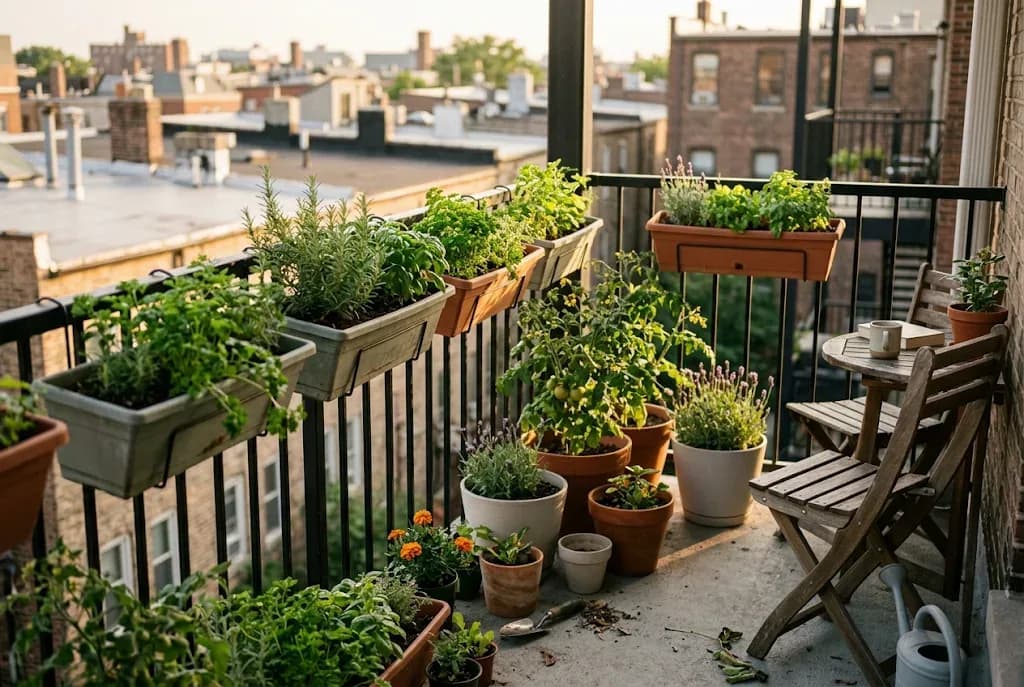
Most balcony gardens start the same way: a cheerful trip to the garden centre in April, and three dead plants by July. The plants were not the problem. The balcony was never measured — not its sun, not its weight limit, not the wind that strips a pot dry by noon. A small balcony garden works when every plant is matched to those three limits first. Get them right and four square metres will hand you herbs all summer and tomatoes by August. Get them wrong, and no amount of enthusiasm saves the basil.
Start with your limits, not a plant list. Count your direct sun: six hours or more grows tomatoes, chillies and most herbs; three to six suits salads and leafy greens; under three, plant for shade. Keep big planters near the wall, use lightweight pots, grow up the railing and walls, and water little and often.
First Things First: What Will Your Balcony Actually Allow?
Three limits decide everything, and none of them is the size of the balcony. Sun hours decide what can grow, weight decides how much of it, and water — how you'll get it there, and where it drains — decides what survives August. Check all three before you buy anything; each takes minutes, and each veto is absolute.
Sun: count it, don't compass it
Direction is a hint, not a measurement. A south-facing balcony hemmed in by taller buildings can see less sun than an east-facing one over open ground — and the balcony above yours steals both light and rain from the strip beneath it.
So count. On a clear day, note when direct sun lands on the balcony and when it leaves. Six hours or more is full sun: fruiting plants, most herbs, Mediterranean anything. Three to six is the greens zone — salads, chard, parsley, chives. Under three, you have a shade garden, and the sooner you plant like it, the better it looks.
Weight: wet compost is heavier than you think
A planter that two people carried up easily in April becomes a different object in July, soaked after watering. Saturated compost weighs roughly as much as the same volume of waterlogged soil anywhere — a single large planter can pass 30 kg once watered, and a row of them along the outer edge is exactly where a balcony is weakest.
The Royal Horticultural Society's guidance on greening balconies is blunt about the fixes: choose fibreglass, plastic or lightweight metal containers over terracotta and ceramic, sit heavy containers near load-bearing walls rather than out at the rail, and if you're genuinely unsure what the balcony can take, ask a surveyor or structural engineer before you fill anything. Loam-based composts hold water better but weigh more than multipurpose ones — that's a real trade, not a detail.
Water: the tap is further than it looks
Balconies rarely have a tap. Every litre arrives by watering can, through your flat, past your floor. That distance quietly decides how much garden you can keep alive in a heatwave — be honest about it now, not in August.
Two more water traps catch beginners. Pots need drainage holes, but free-draining pots over a neighbour's balcony will end your garden by complaint, so saucers are not optional. And if there's a balcony above you, your pots may get no rain at all — the overhang that keeps your chair dry keeps your tomatoes dry too.
Wind is the third hand on the tap. The higher the floor, the faster pots dry; a small pot on a windy ninth floor can go from soaked to dusty in a single hot afternoon.
Okay, So What Can You Actually Grow Up There?
More than you'd think — if the plant matches the light you counted. Herbs are the reliable first win, salads forgive partial shade, and one big pot of cherry tomatoes will out-produce everything else you own. Flowers earn their space by feeding pollinators. What fails is not the plant; it's the plant in the wrong three hours of sun.
Herbs: the highest return per pot
In plain terms: if you grow nothing else, grow herbs — they're expensive in shops, best picked fresh, and most of them are built for pots. Basil wants sun and regular water. Rosemary is the opposite: sun, neglect, and sharp drainage. Parsley and chives tolerate the 3-to-6-hour zone happily.
Two honest warnings. Mint goes in a pot entirely alone — planted with anything else, it takes the whole pot within a season, cheerfully. And the basil plant from the supermarket is several seedlings crammed into one pot to look bushy; split it into three or four pots when you get home and it will live months instead of weeks.
Salad leaves: the shade balcony's revenge
Cut-and-come-again leaves — lettuce mixes, rocket, spinach, chard — are the crops that make a 3-hour balcony feel smug. One long, shallow box along the rail is a salad bar you harvest leaf by leaf for months, and the plants would rather have your light shade than a scorcher.
The weakness is heat: a hot week sends lettuce bolting — flowering, bitter, done. Sow a short row every few weeks instead of one big batch, and a bolted row becomes a gap of days, not the end of the crop.
Tomatoes and chillies: the reward crops
These are why people start. A bush cherry tomato in the biggest pot you can give it — 35 to 40 cm across, no smaller — in six-plus hours of sun, will hand you fruit from midsummer to autumn. Chillies are the same deal in a slightly smaller pot, and both are heavy feeders that want tomato feed once fruit sets.
Now the other side. Both are thirsty in exactly the weeks you're likeliest to go on holiday, and a dry weekend at the wrong moment means split tomatoes and sulking chillies. A self-watering pot, or a neighbour with a watering can and a promise of tomatoes, is part of the equipment. And if your count said under six hours — skip them. Grown in shade, they don't fail dramatically; they just give you leaves and two green tomatoes, which is worse.
Flowers: colour that also does a job
Lavender is the balcony flower we'd plant first: full sun, drought-tolerant once settled, and worked by bees from June onwards. Cosmos, marigolds and nasturtiums are the easy annuals — sow or plant and they simply get on with it, and nasturtium flowers and leaves are edible, peppery in salads.
The trade is maintenance: petunias and lobelia in rail boxes look glorious and drink like sailors, and most annuals need deadheading to keep flowering. If your watering resolve is shaky, lavender and cosmos forgive; hanging baskets don't.
A screen that grows
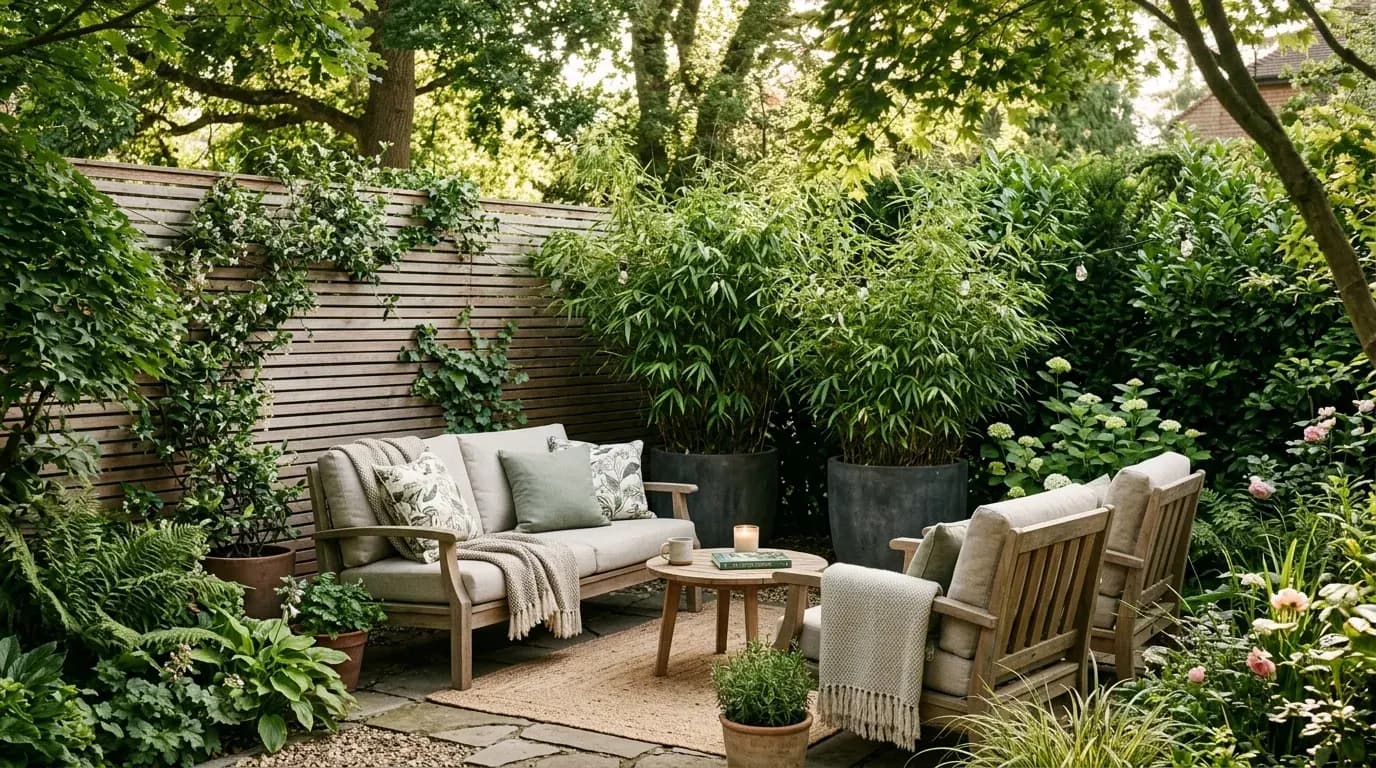
One row of tall pots — ornamental grasses, or clumping bamboo — does double duty: harvest-height plants below, privacy above. It is the planter-wall trick from our backyard privacy guide, run one floor up, and on an overlooked balcony it can be the difference between a garden you sit in and a stage you avoid.
How Do You Set It All Up? (One Weekend, Six Steps)
Setup is a weekend, and the order matters: light first, rules second, hardware third, plants last. Most failed balconies were planted in the reverse order — plants bought on Saturday, limits discovered by August. Do it in this order and the garden mostly looks after itself; skip to step five and you're gardening on hope.
- Count the sun. One clear day, three notes — roughly 10, 1 and 4 o'clock: where's the light, where's it going? Write the total hours down. This number picks your plant list at step 5, which is why it comes first and not as an afterthought.
- Check the rules and the load. Lease or building rules on railing planters and drilling vary more than gardeners expect — read yours before the hardware shop, not after. Then place with the weight rule: big and heavy near the wall, light at the rail.
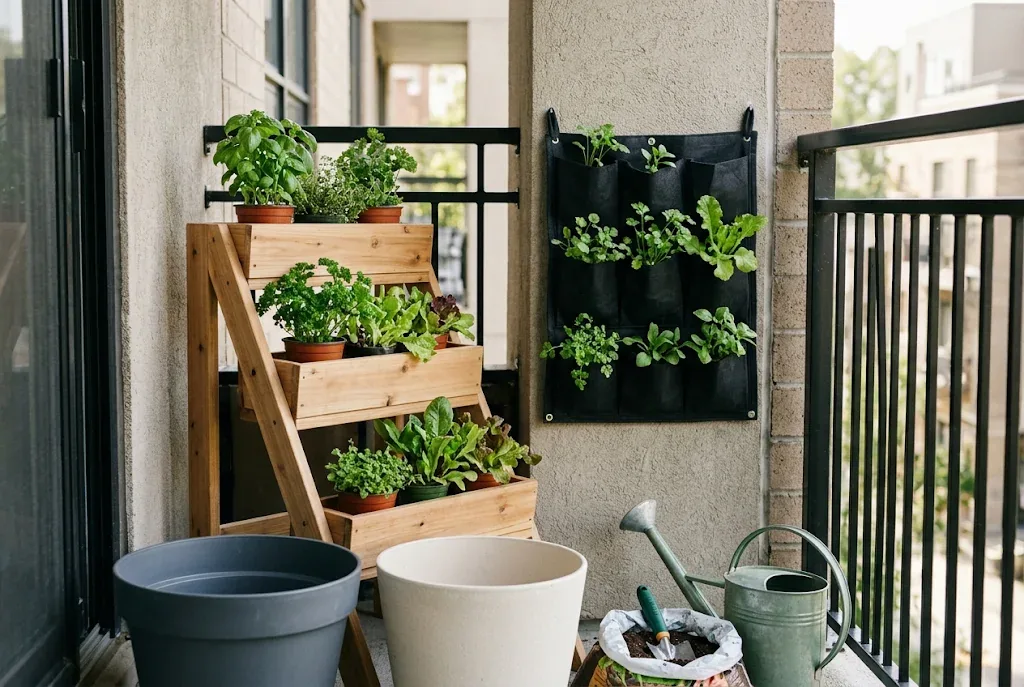
- Fix the bones. Railing boxes first, because they use zero floor. Then one vertical element — a pocket planter on the wall or a tiered stand in the corner — rather than three half-measures. And leave a chair-sized gap in the plan: a balcony you can't sit in becomes a chore with leaves.
- Choose pots for water, not looks. Lightweight, drainage holes, saucers underneath. Fewer, bigger pots beat a crowd of small ones — they dry out a third as fast and look calmer doing it. Self-watering containers for the tomatoes and anything else that's thirsty.
- Fill and plant by your light map. Peat-free multipurpose compost, firmed gently, watered in well. Sun-lovers go to the rail where the light is; the shade-tolerant plants take the strip under the overhang. This is the step where the step-1 number earns its keep.
- Set the watering rhythm. Mornings, a full soak, then leave it. On a fierce west-facing balcony, shade the pots themselves in a heatwave — roots cook in black plastic — using the same tricks as our patio shade ideas: a small sail or a curtain takes the edge off a pot as well as a patio. Arrange holiday cover now, while it's hypothetical.
Which Balcony Is Yours — and What Usually Goes Wrong?
Four balconies cover almost everyone, and each has a right answer. A sunny one should grow food, a shaded one should stop apologising and grow leaves, a windy one should grow low and heavy, and a rented one should grow nothing that needs a drill. Match yours below, then dodge the four mistakes that kill the rest.
Sunny — south or west-facing, six hours plus. Grow the reward crops: tomatoes, chillies, basil, lavender, rosemary. Your constraint is never light; it's water and cooked roots. Big pots, self-watering where you can, pot shade in a heatwave.
Shaded — north or east-facing, or under a deep overhang. Grow leaves and herbs that like it: salads, spinach, mint (alone), parsley, chives, plus ferns and begonias for looks. The honest verdict: do not plant tomatoes here and hope. A leaf garden done well is a better garden than a fruit garden done hopefully.
Windy — high floor or exposed corner. Grow low and heavy: wide squat planters, drought-tolerant planting, everything secured. Skip tall, top-heavy pots and anything on a spindly stand. Your pots will dry faster than any other balcony's, so size them up.
Rented — no drilling, no fixing, deposit at stake. Grow in anything freestanding: hook-on railing boxes, stands, pocket planters, pots. It all lifts out the day you leave. Two duties come with it: check the lease before the railing boxes, and saucers under everything, always.
Then the mistakes — the ones that end more balcony gardens than weather does:
- Guessing the sun. The compass said south; the tower block opposite said otherwise. Count the hours.
- All the weight in the wrong place. Heavy planters clustered at the outer rail — the weakest line of the structure, and the hardest to water.
- Drainage with nowhere to go. No holes: drowned roots. Holes but no saucers: brown waterfalls on the balcony below, and a complaint that ends the project.
- A forest of tiny pots. Each one bakes dry daily in summer, so the garden is a watering emergency with foliage. Fewer, bigger pots are the whole secret.
Frequently Asked Questions
Can I really grow tomatoes on a small balcony?
Yes — with six or more hours of sun and a big pot. A bush cherry tomato in a 35–40 cm self-watering pot, fed once fruit sets, will crop from midsummer to autumn. Under six hours, no: grow salads instead and buy the tomatoes.
How much weight can a balcony hold for plants?
No universal number exists — buildings differ too much. Use the safe habits instead: a large planter can pass 30 kg once watered, so keep big pots near the wall, spread the load, choose lightweight containers — and if you're unsure, ask building management or a surveyor.
What grows on a north-facing balcony?
Shade-tolerant plants, and plenty of them: salad leaves, spinach, chard, mint, parsley and chives, plus ferns and begonias for colour. You'll harvest leaves and herbs rather than fruit — which is a good garden, not a failed one, if you plant for it from the start.
How often do balcony plants need watering?
In summer, pots in sun and wind can need water every day. Bigger pots stretch that to every two or three days, and self-watering containers further. Water in the morning, soak the pot through, and never count on rain if there's a balcony above yours.
I'm renting — can I still have a balcony garden?
Almost always, yes. Hook-on railing planters, freestanding stands, pocket planters and pots fix nothing to the building and lift out when you leave. Check your lease for railing and weight rules first, and put saucers under every pot so nothing drips on the flat below.
Conclusion
A balcony garden isn't a small garden — it's a matched one. Count the sun, respect the weight, solve the water, and the plants mostly choose themselves. So before you buy a single plant this weekend, do the one free thing: note the light at 10, at 1 and at 4, and write the hours on the door of the balcony. That number is your whole plant list, decided.