The thermostat is off, the boiler is silent, and the house is still warm enough to sit in — because the heat was already there. Every home makes heat all day: the oven, the shower, two people in a room, a patch of winter sun through the glass. The question is never how to make more of it. It is how to stop it leaving.
That is how to keep house warm without heating: block the exits, use the heat the house already makes, and heat the person instead of the whole building. It is a keeping job, not a making job — and the cheapest degree of warmth in any home is the one that was already paid for and nearly escaped.
Seal the draughts around doors, windows and floors, block an unused chimney, draw heavy curtains at dusk, put rugs on bare floors, and shut the doors of rooms you are not using. The World Health Organization puts 18°C as the safe indoor minimum — and a draught-free house holds that temperature far longer than a leaky one.
Where Does the Heat Actually Go?
Out through the fabric of the house, in proportions the Energy Saving Trust has measured: about a third through the walls, a quarter through the roof, about a fifth through windows and doors, and 10 to 20 percent through the floor. Draughts carry the rest. Knowing the split tells you where the first pound is best spent.
Think of it as a funnel. Heat rises, so the roof takes its quarter first; the walls, with the largest surface area, take the biggest share; and the gaps — around doors, through letterboxes, up the chimney — carry warm air out in a steady stream all winter. The target is not tropical: the World Health Organization's 2018 housing guidelines propose 18°C as a safe and well-balanced indoor temperature, with older people and young children needing a little more, around 20°C.
The number has a history. Until the early 1980s the WHO recommended a wide 15°C to 25°C range; a 1982 working group narrowed it to 18°C to 24°C, and 18°C has been the floor ever since. That matters for this guide: the aim is not to heat the house to 21°C for free — it is to hold 18°C with the heat the house already makes, and to know which rooms deserve it most.
The roof deserves its own line, because it is the one exit you can close for good. Heat rises, so an uninsulated loft loses about a quarter of the house's warmth — and the Energy Saving Trust's fix is simple: top the loft insulation up from 120mm to at least 270mm. It is one of the cheapest insulation jobs in the house, and unlike draught-proofing it never needs doing again.
Everything that follows is about closing the exits in the order they leak.
What Are the Biggest Wins?
Draught-proofing, first — it is the cheapest serious saving in the house. The Energy Saving Trust puts draught-proofing windows, doors and floors at around £55 a year, and blocking an unused chimney at around £45 more. A professional job for the whole house costs about £250; doing it yourself costs far less.
Find the draughts first
Start by finding them. The Energy Saving Trust's method is simple: look for visible light under and around doors and windows, listen for rattles and whistling on a windy day, and feel for moving air around doors, windows, floorboards, skirting boards, pipes that pass through outside walls, and fireplaces. Curtains that move when the window is shut are the giveaway — that is a draught you can see. The Energy Saving Trust's draught-proofing guide walks through every gap in the house, and we checked it while writing.
Doors, windows and floors
Doors leak in four places: the keyhole, the letterbox, the gap at the bottom, and the edges. A purpose-made keyhole cover drops a metal disc over the hole; a letterbox flap or brush stops the slot; a brush or hinged flap seals the bottom; foam, brush or wiper strips seal the edges. Windows take the same strips — self-adhesive foam is cheap and easy but does not last, while brush or wiper strips cost more and do — and sash windows want brush strips, not foam. Floorboard gaps take a silicone-based filler that moves with the boards. The same sealing that keeps heat in keeps noise out, and our renter-friendly guide to soundproofing a room cheaply shows the overlap — one job, two benefits.
The chimney — the hole in the ceiling
An open, unused chimney is a hole in your ceiling that runs all the way to the sky. The University of Liverpool has calculated that around 5% of household heat escapes up an uncapped chimney, and the Energy Saving Trust puts blocking one at around £45 a year. A chimney balloon or a wool chimney sheep sits in the flue and stops most of the draught — the sheep's maker says it stops about 95% of the air while letting enough through for the flue to breathe. And if you do light fires, know what you are getting: the US Environmental Protection Agency's Burn Wise guidance puts it plainly — "most traditional open fireplaces lose over 90 percent of the fire's heat out the chimney, and much of the heated air in the room goes with it."
| Fix | Cost | What it saves | Effort |
|---|---|---|---|
| Draught-proof doors, windows, floors | DIY cheap; ~£250 professional | ~£55 a year (EST) | An afternoon |
| Block an unused chimney | Balloon or sheep, low cost | ~£45 a year (EST) | Half an hour |
| Heavy lined curtains | Moderate | 14% less window heat loss (HES) | Hang once |
| Secondary glazing film | Low | Less than glass, more than curtains | An hour per window |
| Rugs on bare floors | Moderate | Part of the 10–20% floor loss | Lay them down |
| Close doors to unused rooms | Free | Heat stays where you are | Shut the door |
Read the table by payback, not by price. The chimney balloon costs least and saves most per pound; the curtains cost most and save least — which is why they come after the draught-proofing, not before it. And the free row, shutting a door, is the one most homes skip entirely.
How Do You Make the Heat You Already Have Work Harder?
By keeping it where you are and putting it to work twice. Curtains hold the heat in at night, rugs insulate the floor under your feet, closed doors keep the warm rooms warm, and the sun and the oven give you heat you have already paid for. None of it needs a boiler.
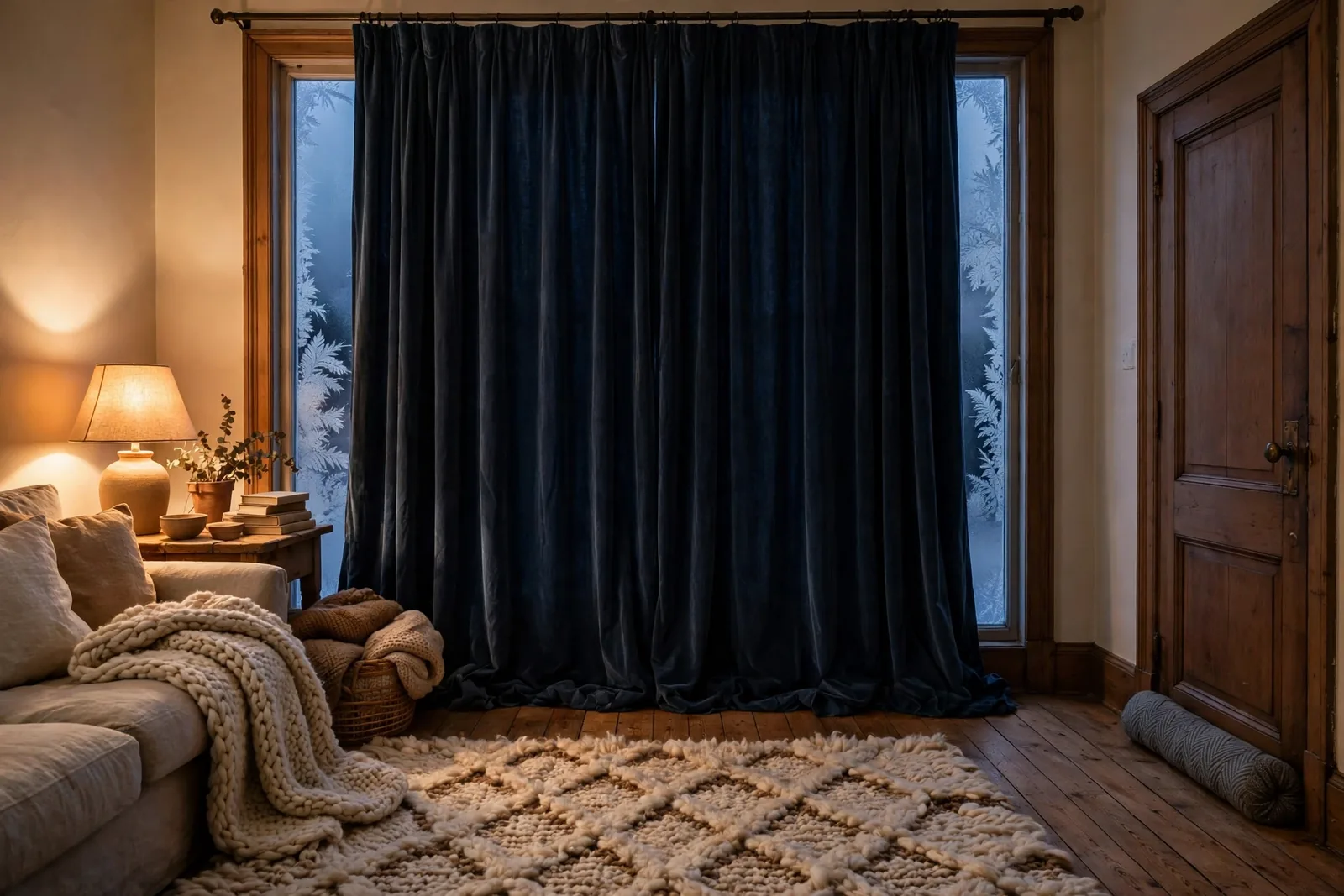
Curtains first, because they are the fix most people buy first — and the weakest of the three window fixes Historic Environment Scotland tested. Its tests on a traditional sash window found heavy, lined curtains cut heat loss by 14%, while timber shutters cut it by 51% and secondary glazing by 63%. English Heritage's tests, measuring the whole window including the frame, found heavy curtains cut heat loss by 41% when they sealed well at the edges. The gap between those two numbers is the whole lesson: the fit matters more than the fabric. Curtains that hang clear of the glass, reach the floor, and close fully at dusk do the work; short, thin ones mostly decorate.
Then the floor. Between 10 and 20 percent of a home's heat goes down through it, and a bare wooden floor is a cold surface your feet meet every morning. A thick rug is insulation you can walk on — it holds a layer of still air against the boards and makes the room feel warmer at the same air temperature. Our rug size guide covers which size actually anchors a room; for warmth, the rule is simple — the rug should cover the floor you stand on, not just the floor you look at.
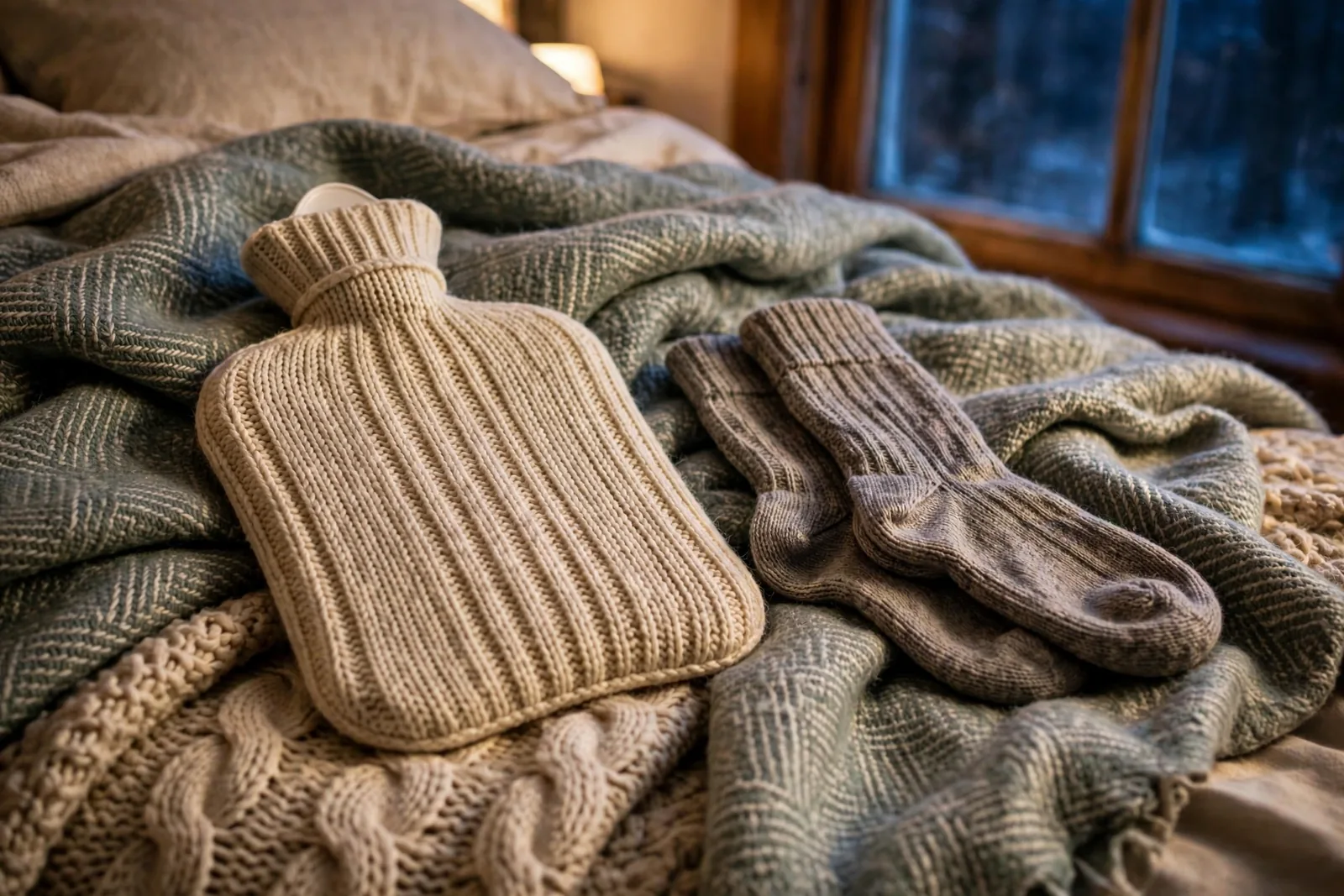
The free heat is already in the house. Open the curtains on a sunny day and the low winter sun warms the room for nothing; close them at dusk before the glass turns cold. Cook in the evening and the oven's leftover heat warms the kitchen after you switch it off. Shut the doors of rooms you are not using — a closed door is the cheapest wall in the house. And heat the person, not the room: the hot water bottle is the oldest version of that idea, a bed warmer since the 16th century, its modern rubber design patented in 1903 by the Croatian inventor Slavoljub Eduard Penkala. Florence Nightingale was said to prefer one in ceramic or Indian rubber; the principle has not changed in five hundred years.
What Should You Do Tonight — and What Should You Never Do?
Tonight, do the free things: curtains drawn at dusk, doors shut to cold rooms, a towel rolled under the front door, a hot water bottle in the bed. The never-do list is shorter but more important — it is where keeping warm turns into damp, mould, or danger.
- Draw the curtains at dusk. As soon as the light goes, the glass turns cold — curtains closed before then hold the day's heat in.
- Shut the doors to rooms you are not using. A spare bedroom or a hallway does not need your heat. Close it off and the warm rooms stay warm.
- Roll a towel under the front door. A draught excluder takes ten minutes to buy and fit; a rolled towel takes ten seconds and works tonight.
- Fill a hot water bottle. It costs pennies to fill and keeps a bed warm for hours — heat the person, not the bedroom.
- Check the chimney. If the fireplace is unused, a balloon or wool sheep in the flue stops the draught — and remember to take it out before any fire is lit.
And the never-do list. Never block trickle vents, air bricks or extractor fans — the Energy Saving Trust is explicit that good ventilation is still essential, and sealing a room without it traps the moisture inside, which is how condensation and mould start. Never leave a chimney draught excluder in place when you light a fire: a blocked flue fills the room with smoke and carbon monoxide. Never heat a room by leaving a gas oven running or using an unflued heater — both fill the air with moisture and carbon monoxide. And never draught-proof a room that already has a condensation problem; fix the damp first, with our guide on how to stop condensation on windows, then seal the gaps.
Frequently Asked Questions
Can you keep a house warm without any heating at all?
In a mild winter, a well-sealed house can hold 18°C from cooking, sunlight and body heat alone. In a hard freeze, no — draught-proofing stretches the heat you have, it does not create heat. Use the heating for the coldest nights.
What is the cheapest way to keep a house warm?
Draught-proofing, by a distance: around £55 a year saved for a DIY job that costs a few pounds in strips and filler, plus around £45 more for blocking an unused chimney. Shutting doors to cold rooms costs nothing at all.
Do curtains really keep a room warm?
Yes, but less than most people think: heavy lined curtains cut heat loss through a sash window by 14% in Historic Environment Scotland's tests. The fit matters most — curtains that reach the floor and close fully do far more than short, thin ones.
Should you close trickle vents in winter to keep warm?
No — never. Trickle vents are background ventilation: closing them seals moisture in and causes condensation and mould. The Energy Saving Trust warns against blocking vents, air bricks or extractor fans. Seal the draughts, not the ventilation.
Is it safe to block a chimney you never use?
Yes, with a chimney balloon or wool sheep — but hang the warning tab below the fireplace opening so nobody lights a fire without removing it first. A blocked flue with a fire below it fills the room with smoke and carbon monoxide.
Conclusion
Tonight, do the free row: curtains at dusk, doors shut, a towel under the front door. This weekend, walk the house with your hand out and find the draughts — then seal them. That is how to keep house warm without heating: the heat is already in the house, and winter is about not letting it leave.


