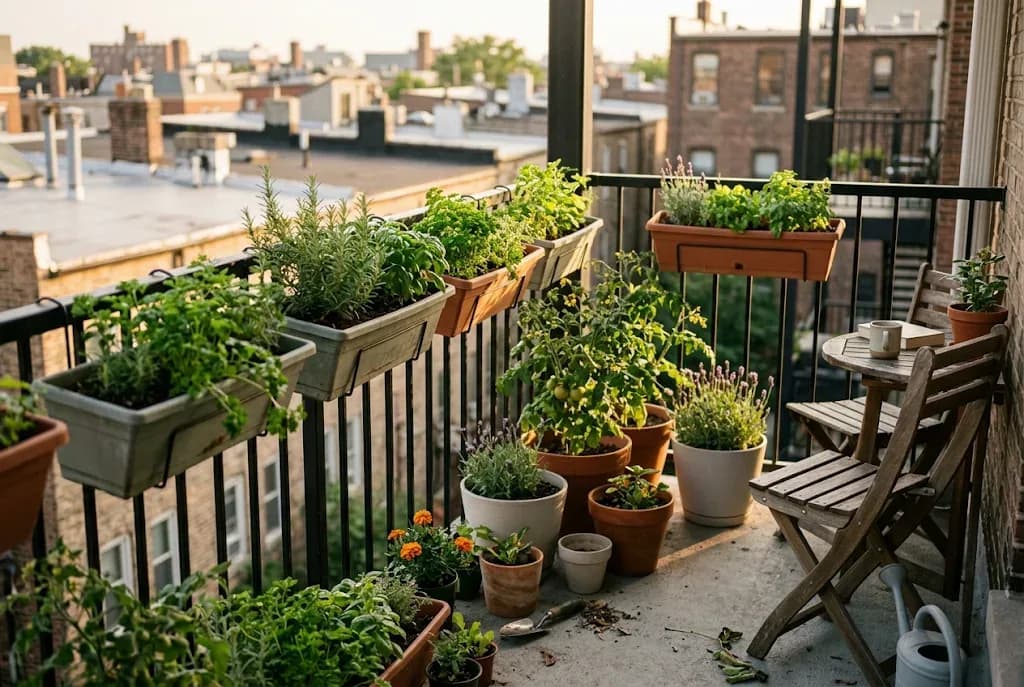
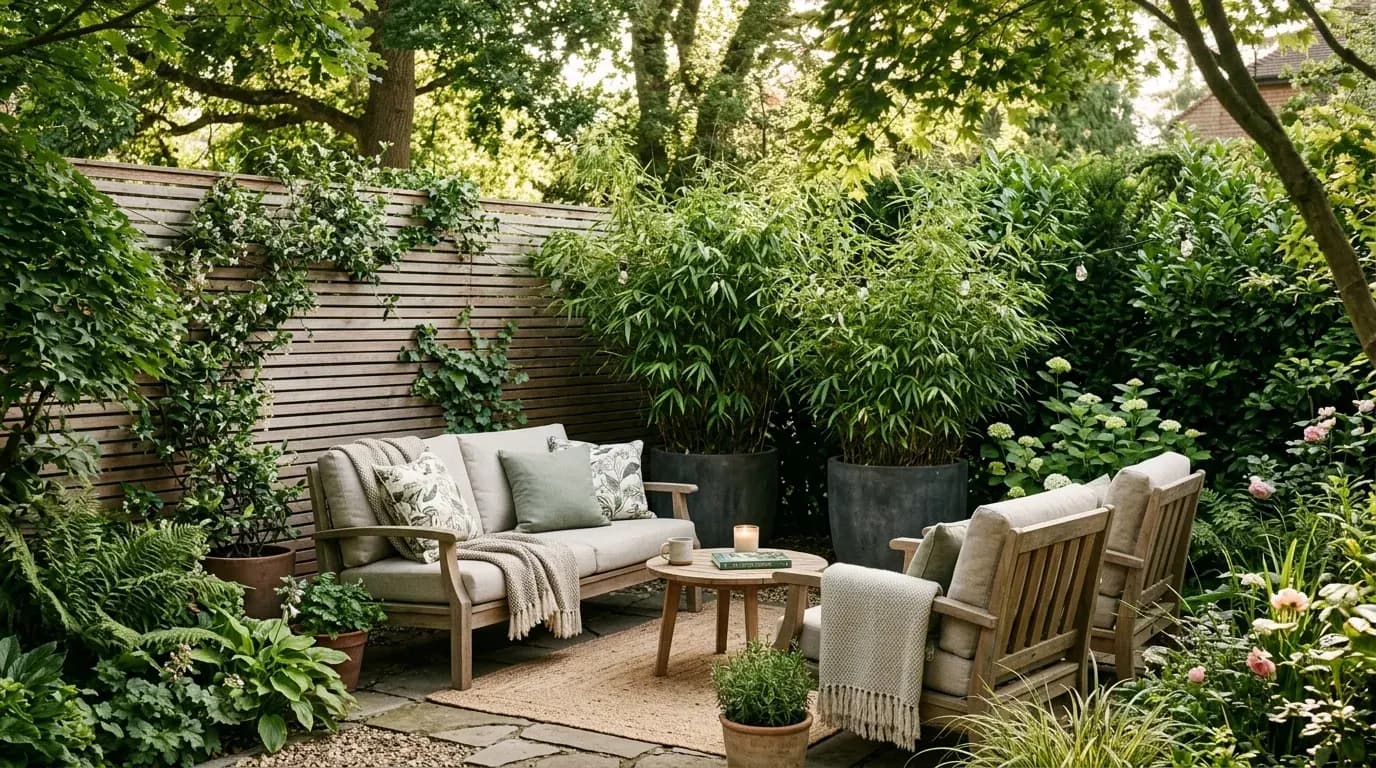
November empties the garden. The summer pots are bare, the balcony looks abandoned, and the front door is flanked by two empty containers and a dead pelargonium. Most people accept the grey and wait for spring. They do not have to.
A winter container garden is the fix: pots planted in autumn with evergreens for shape, hardy flowers for colour, and bulbs buried underneath for spring. Planted by mid-November, one pot carries colour until the tulips open in April.
These winter container garden ideas cover the three-part recipe every good winter pot follows, the plants that survive a cold, wet winter in a pot, three ready-made recipes for a shady door, a sunny patio and a windy balcony, the planting steps, and the winter-care habits that keep it alive.
A winter container garden is a pot planted in autumn — ideally by mid-November — with three layers doing three jobs: an evergreen for structure, leafy fillers for fullness, and hardy flowers or berries for colour, with spring bulbs buried underneath. Use a frost-proof pot with drainage holes and gritty compost, raised on feet so winter rain escapes. Water sparingly, feed nothing, and it lasts until spring.
What Makes a Winter Container Work?
Three jobs in one pot, and a pot that can take the weather. Every good winter container has an evergreen for structure, foliage to fill the gaps, and something flowering or fruiting for colour — plus bulbs underneath for spring. The pot matters as much: frost-proof, free-draining, raised on feet so winter rain escapes.
The structure: one evergreen
Every pot needs a centre that holds its shape all winter. A small evergreen shrub does that job: skimmia, euonymus, a dwarf conifer, a clipped box ball. Pick it first: it is the plant the eye lands on in January. One per pot is enough — two evergreens in a 40 cm pot fight each other by February.
The fill: foliage that earns its place
Structure alone looks stiff, so the second job is foliage that fills the gaps. Heuchera is the workhorse here: its leaves come in almost every colour from lime green to deep plum, and most varieties keep them all winter. Trailing ivy softens the pot's edge, and evergreen grasses like carex add movement on a windy spot. Foliage is the insurance policy — if the flowers sulk through a cold snap, the pot still looks planted.
The colour: flowers and berries
The third job is the one people notice first: winter pansies and violas, winter heather, hardy cyclamen, or the red buds of a skimmia. These genuinely flower in cold weather, in short bursts through mild spells. Violas are the tougher pick: smaller flowers than pansies, but they stay upright through wind and rain that flattens big pansy blooms. A skimmia's red buds read as colour from across the street all winter.
The pot matters as much as the plants
A winter pot has a harder life than a summer one. Roots in a pot are far more exposed than roots in the ground: cold reaches them from every side, and wet compost that freezes can crack ordinary terracotta clean in half. So use frost-proof pots — frost-proof terracotta, glazed ceramic, wood, or good plastic — with drainage holes you have checked are open. Wet compost kills more winter pots than cold does, which is why drainage comes first in this guide.
Compost wants grit in it. Mix three parts peat-free multipurpose compost to one part horticultural grit — the RHS ratio for tulips in pots — and the mix drains freely instead of sitting sodden after every downpour. Loam-based compost holds water better but weighs far more, which matters on a balcony.
Which Plants Actually Survive Winter in Pots?
The survivors are evergreens and hardy perennials that shrug off frost and wet: skimmia, euonymus and heuchera for shape and leaf colour; violas, winter heather and hardy cyclamen for flowers; ivy and carex to trail and fill. Everything in these winter container garden ideas is hardy to at least −10 °C, and none of it needs bringing indoors.
Skimmia japonica 'Rubella' is the plant we would buy first. It holds deep red buds all winter, then opens scented white flowers in spring — two seasons from one plant. Happiest in part shade, it is the natural centre for a north-facing front door, asking only for shelter and compost that never quite dries out.
Euonymus fortunei is the tough one: varieties like 'Emerald 'n' Gold' carry variegated leaves that brighten a gloomy corner, grow in sun or shade, and cope with wind that shreds softer plants. Heuchera does the colour work at leaf level — two or three around a skimmia and the pot looks designed. One warning: heuchera hates wet feet, so give it the grittiest compost, never a saucer of standing water.
For flowers, winter heather brings masses of tiny pink, purple or white flowers and asks for almost nothing. Hardy cyclamen suits shaded pots and the ground beneath small trees. Violas flower on and off all winter in mild spells; pansies flower bigger but flop in heavy rain, so if your pots face the weather, violas are the honest choice.
What fails is worth naming too: tender pelargoniums, supermarket herbs grown under glass, and summer bedding will not survive a winter pot. Skip anything needing daily water — a winter pot is checked weekly, not tended daily.
| Spot | Centre (structure) | Around the edge (fill + colour) | Underneath (bulbs) |
|---|---|---|---|
| Shady front door | Skimmia 'Rubella' | Two heucheras, white cyclamen, trailing ivy | Dwarf narcissus 'Tête-à-Tête' |
| Sunny patio | Dwarf conifer or Carex 'Everest' | Violas, winter heather, black mondo grass | Crocus and dwarf tulips |
| Windy balcony | Euonymus fortunei | Carex 'Evergold', violas, ivy | Iris reticulata or muscari |
Which recipe is right for you?
Shady front door. The skimmia recipe — built for shade, and the red buds show up best against a dark doorway. Give it the best compost and the biggest pot you can fit.
Sunny patio. The sunny recipe is the one you see from the sofa all winter, so plant it where the low sun catches it. The crocus and tulips underneath open while the rest of the garden still sleeps.
Windy balcony. The euonymus recipe is the only one built for wind: low, heavy, nothing tall to catch a gust. Keep the pot squat and wide, group it against the wall, and read our small balcony garden ideas for the weight and watering rules first.
Small garden, one pot only. Pick the shady-door recipe and put it by the front door. One good pot at the entrance beats three thin ones where nobody walks in January.
How Do You Plant a Winter Container?
One pot takes about half an hour: a frost-proof container with drainage holes, gritty compost, bulbs at the bottom, plants on top, watered once and raised on feet. The order matters — bulbs go in first, because they sit deepest — and the single rule is drainage: a pot that cannot drain will rot before Christmas.
- Choose the pot. Around 35 to 40 cm wide and at least 30 cm deep, frost-proof, with drainage holes in the base. Check the holes are open — silt blocks more pots than frost ever cracks.
- Raise it before you fill it. Set the pot on pot feet or bricks now, while it is still light enough to lift. Feet let water escape underneath and keep the pot out of the puddle that forms on every patio in a wet winter.
- Mix the compost. Three parts peat-free multipurpose compost to one part horticultural grit, mixed before it goes in. Fill the pot to about a third and firm it gently — pressed, not stamped.
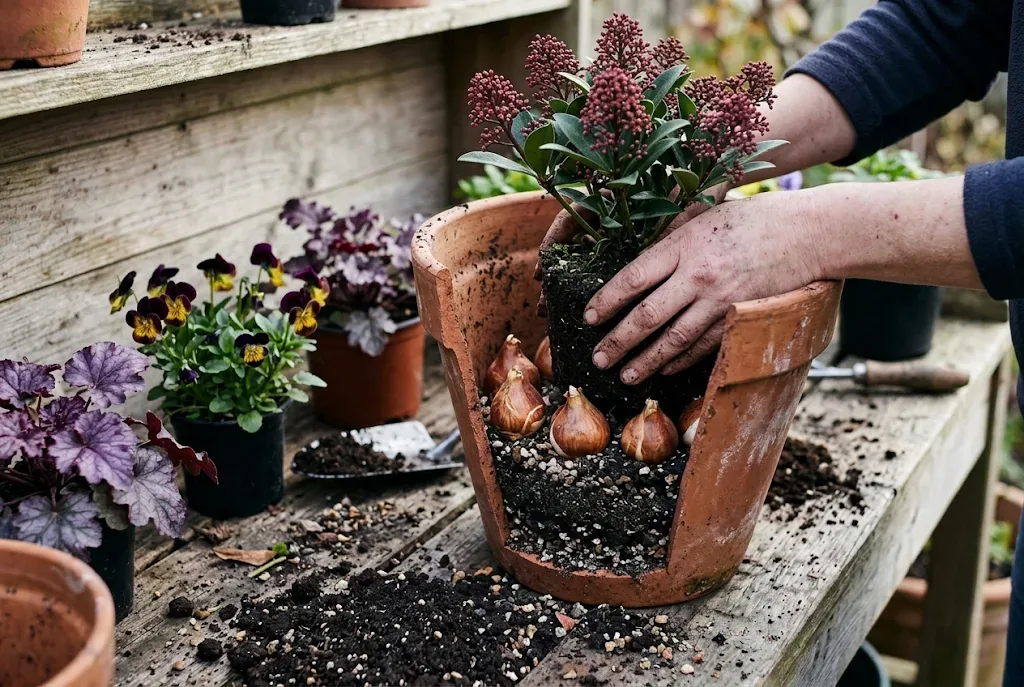
- Lay the bulb layer. Bulbs go in now, pointed end up, at a depth of about three times the bulb's height — the RHS rule, and the one that decides whether they flower or come up blind. In a 45 cm pot, 12 tulip bulbs makes a good display, up to 20 for a full one. For a longer show, layer two or three kinds — big bulbs deepest, small ones shallowest — the "bulb lasagne" that staggers crocus, narcissus and tulips from one pot. Cover with more compost.
- Plant the top layer. Centre first: the evergreen goes in the middle, slightly deeper than it sat in its nursery pot. Fillers around it, trailers at the edge where they can spill. Firm each plant gently and leave the compost about 2.5 cm below the rim, so water does not run straight off.
- Water once, properly. Soak the pot through until water runs from the drainage holes, then leave it. That first soak settles the compost and proves the drainage works.
- Put it where it will live. Group pots against a house wall for shelter — the wall breaks the wind and gives off a little warmth — and match the recipe to its spot: skimmia to shade, violas and heather to sun. A pot under a pergola or sail stays drier through winter rain; our patio shade ideas cover those structures. Move it now, not in January, when a wet 40 cm pot weighs more than you remember.
How Do You Keep Winter Pots Alive Until Spring?
Mostly by leaving them alone. Winter pots need less water, no feed at all, and protection from the two real killers: waterlogged compost and frozen roots. Check them once a week, water only when the compost is dry an inch down, and never water on a day frost is forecast.
November — plant and settle. This is planting month: get the pots done by mid-November while the compost is still a little warm and roots can settle before the real cold. Feet under, saucers off — saucers that help in summer become a cold bath in winter. If December looks early, a fleece draped loosely over the tenderest plant is enough; never wrap foliage in plastic, which traps moisture and freezes it there.
December — first frosts. When the first hard frost is forecast, wrap the pots themselves — not the plants — in bubble polythene or hessian, tied loosely so air still moves. The RHS advice is to wrap at the first sign of frost and keep containers grouped in a dry, sheltered spot: roots in pots freeze far faster than roots in the ground. The pots by the front door earn their keep on dark evenings — one warm light is all they need; see our outdoor lighting ideas for a small garden.
January — the deep cold. Water least in January. Evergreens still lose water through their leaves, especially in wind, so check weekly and water on a mild morning if the compost is dry — never the day before a frost, never into a saucer. Feeding is unnecessary in winter; the plants are barely growing, and feed only softens growth the next frost kills. If snow falls, leave it: it insulates better than any cover you own.
February — the turn. The first bulbs push through, and the pots start paying rent. Tidy dead leaves off the compost, and watch for slugs in the mild spells — they love fresh bulb shoots. Do not replant yet — the violas and heather have another month in them, and the tulips are still to come.
Then the five mistakes that end more winter pots than weather does:
- Watering on a schedule. Summer habits kill winter pots. Water by feel — dry an inch down means water, damp means wait — always in the morning, so the compost is not wet when night temperatures drop.
- Leaving the saucer on. A saucer full of rainwater is a cold bath for the roots. Take saucers off for winter.
- Feeding in winter. The plants are dormant, not hungry. The RHS is explicit that feeding is unnecessary in winter — save it for March, when growth restarts.
- Bringing pots into a warm room. A cold snap is no reason to carry a dormant pot indoors: the warmth wakes the bulbs early, the growth goes soft, and the next trip outside finishes it. A cold porch is shelter; a living room is a trap.
- Ignoring a sodden pot. If compost stays wet for weeks, move the pot under cover until it dries — the RHS gives exactly this advice for waterlogged containers. Wet roots rot quietly, and by the time the plant shows it, the roots are gone.
The full routine is in the RHS container maintenance guide — we checked it while writing, and every rule above matches it.
Frequently Asked Questions
When should you plant winter containers?
Plant in autumn, late September to mid-November, while the compost is still warm enough for roots to settle. December still works if the compost is not frozen — but plants get less time to establish before the hardest frosts.
How often do you water pots in winter?
Check weekly and water only when the compost is dry an inch down — usually every two or three weeks, less in rainy spells. Water in the morning, never the day before a frost, and let the pot drain freely.
Do winter containers need feeding?
No. Plants barely grow in winter, and the RHS advises feeding is unnecessary in the cold months. Feed softens new growth, which the next frost kills. Start in March, when the bulbs are up and growth restarts.
Can you leave terracotta pots outside in winter?
Only if labelled frost-proof. Ordinary terracotta absorbs water, and freezing water expands and cracks the pot. Wrap doubtful pots in bubble polythene, or move them to a sheltered wall for the coldest weeks.
What do you do with winter pots in spring?
Keep the evergreens and heucheras — they carry into the summer display. Lift spent violas once the bulbs flower, and treat container tulips as one-season plants: the RHS notes they flower less well in a pot's second year, so replace them next autumn.
Conclusion
A winter container is not a smaller garden. It is a patient one: three jobs in one pot, bulbs underneath, four months of colour from half an hour of planting. Start this weekend — one pot by the front door, skimmia in the middle, violas around it, a dozen tulip bulbs underneath. By April, you will wonder why the pots ever stood empty.