In November, the garden goes dark at five. For half the year, the hours you are actually home are the hours your garden is invisible — which makes lighting the single highest-return change a small garden can get. A few well-placed lights do what no new plant can: they give you the garden back for the evening, and make a small space feel larger, not smaller.
The secret is not more light — it is three kinds of light, in the right places, in warm white. This guide works through the three-layer rule, a one-weekend plan for a small garden, the honest solar-versus-wired choice, and the mistakes that turn a lit garden into a glare-filled fairground.
To light a small garden well, use three layers: one warm ambient light over the seating area (usually string lights), two or three path lights along the way, and one accent light on a tree or plant. Keep every bulb warm white (2700–3000K), and most small gardens need only three to five fixtures in total.
What Makes Outdoor Lighting Work in a Small Garden?
Layering, not brightness. A small garden lit by one bright floodlight looks flat and smaller; the same garden lit by three gentle layers — ambient light overhead, task light on the path, accent light on one feature — looks bigger, because the eye keeps finding somewhere to go. Warm white light does the rest.
The three layers each do a different job. Ambient light is the glow that makes the space usable — string lights over the seating area are the classic version, because they put light at eye level without a fixture in sight. Task light is the practical one: path lights and step lights that stop you tripping, placed low and staggered so the line reads as a guide, not a runway. Accent light is the smallest layer and the one people skip — a single uplight at the base of a tree, a spotlight on a textured wall — and it is what gives a lit garden depth after dark.
Color temperature matters more than brightness. Warm white — 2700 to 3000 Kelvin — is the light of candlelight and late sun, and every garden source agrees on it: cool white above 5000K looks clinical outdoors, like a car park. Kelvin is simply the scale of a bulb's color: lower numbers are warmer. When in doubt, buy the warmest bulb on the shelf.
Brightness is measured in lumens, and small gardens need surprisingly little of it. Path lights work at 100 to 200 lumens each; accent lights rarely need more than 300. Most small backyards need three to five fixtures in total — one or two ambient, two or three path or accent lights, one near the seating. Start there; a garden you can add to beats a garden you have to dim.
Almost everything you buy will be LED now, and that is good news for running costs. The US Department of Energy's guidance is that residential LEDs use at least 75% less energy and last up to 25 times longer than incandescent bulbs — its LED lighting guide is the source to check if a product's claims look optimistic. LEDs also run cool, which is why a string of them can hang against wood and fabric without the heat worry old bulbs carried.
How Do You Light a Small Garden in One Weekend?
One weekend, five steps, no electrician for the solar and plug-in version. The order matters: walk the garden at dusk first and decide where light should fall, then hang the canopy, then the path, then the single accent. Buying before the dusk walk is how gardens end up with a box of unused lights.
- Walk the garden at dusk, phone torch in hand. Stand where you sit, then walk the path, then look back at the garden from inside the house — the view from the sofa is where you will see the lighting most. Mark three things: the seating area, the route you walk after dark, and the one feature worth lighting (a tree, a textured wall, a water feature). Everything else stays in shadow; shadow is what makes the lit parts glow.
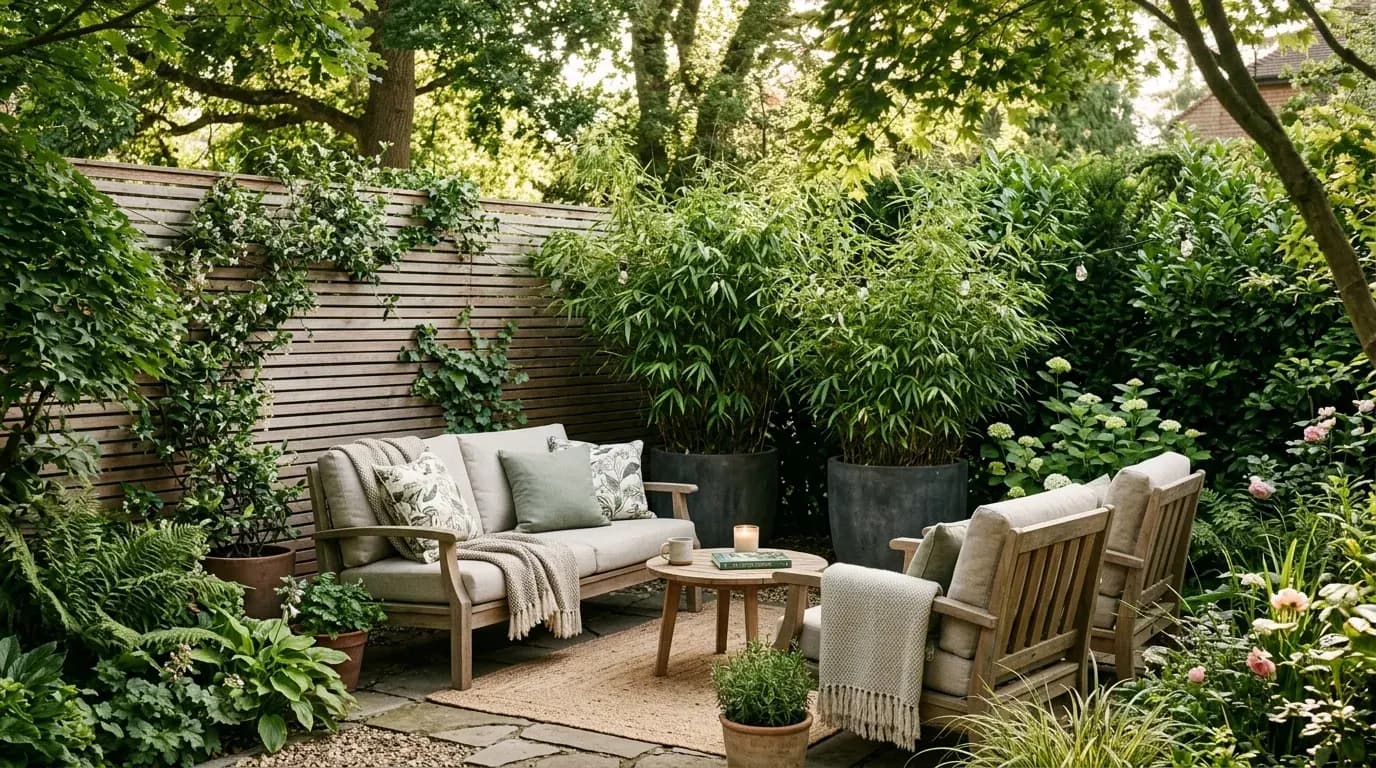
- Hang the string canopy first. A single strand of warm-white LED festoon lights between the house wall and a fence post, or across a pergola, is the most transformative thing on this list — and the cheapest per unit of atmosphere. Hang them in a gentle curve, not pulled taut: the slight droop is the whole look, and the lowest point should sit 8 to 10 feet up. The fence you screened for privacy doubles as the backdrop here — string lights along a fence top turn a boundary into a feature, which is the same thinking as our guide to backyard privacy without a fence: work with the edges you already have.
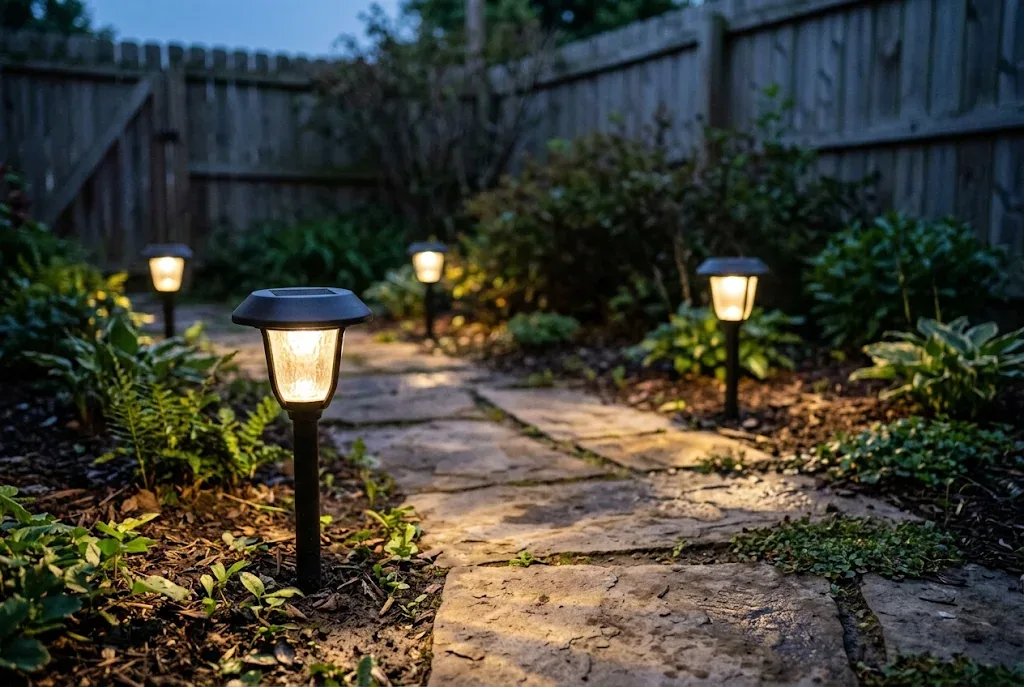
- Stake the path lights, staggered. Solar stake lights go in without tools: push them into the soil on alternating sides of the path, 18 to 24 inches apart, angled slightly outward so the light washes the path instead of pointing at the sky. Keep the solar panels in the sunniest spot you have — on a shaded path, choose models with a separate panel on a cable so the panel can sit in sun while the light sits where you need it.
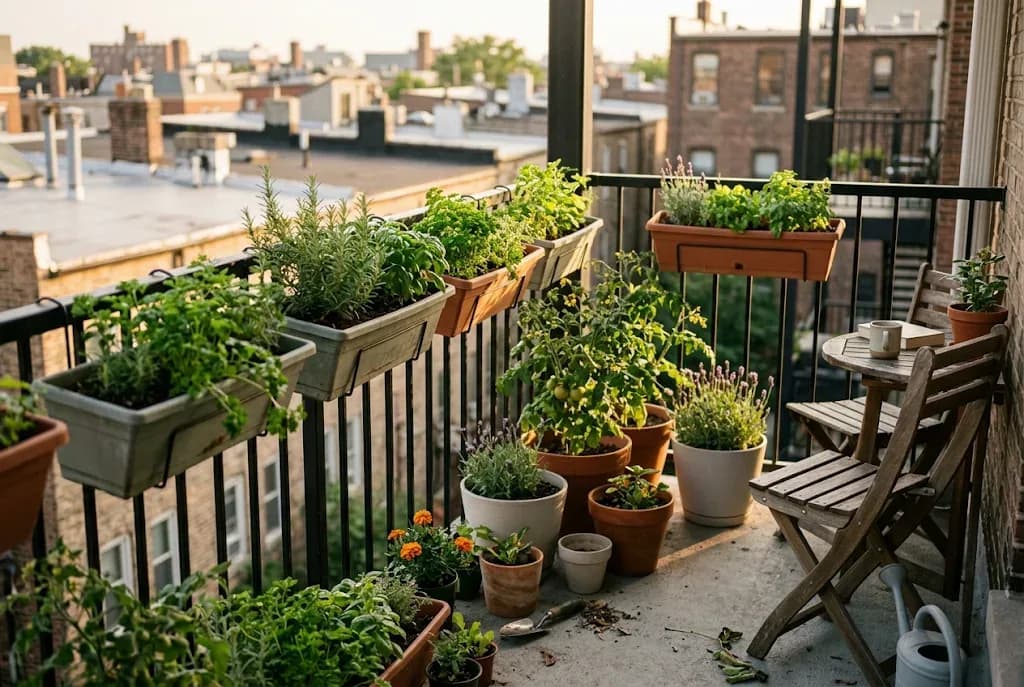
- Add one accent light. One uplight at the base of a small tree or a potted bamboo, aimed upward, creates the depth that makes a small garden feel larger after dark — the eye reads the lit height and the garden seems to extend past the fence. If your garden is a balcony, the same trick works smaller: string lights along the railing and one lantern among the pots, as in our small balcony garden ideas.
- Put it on a timer. Solar lights switch themselves on at dusk; plug-in lights need a timer or a smart plug. Set the evening to end: lights off at midnight keeps neighbors happy, saves the batteries, and — the part nobody mentions — keeps the garden feeling special instead of floodlit all night.
Solar, Plug-In or Hardwired — Which Power Should You Choose?
It depends on three things: whether you own the garden, whether it gets sun, and how bright you need it. Solar wins on cost and simplicity, plug-in wins on brightness and reliability, and hardwired low-voltage wins only when you plan to stay and want the garden lit like a room.
| Power | Typical cost | Brightness | Install | Best for |
|---|---|---|---|---|
| Solar | $20–80 per set | Good for paths and accents | None — push in and go | Renters, sunny gardens, paths |
| Plug-in (mains or USB) | $25–100 per set | Brightest, most reliable | Needs an outdoor outlet | String canopies, seating areas |
| Hardwired low-voltage | $150+ plus transformer | Brightest, fully controllable | Cable burial, some skill | Owners staying long-term |
If you rent
Solar and plug-in, full stop. Everything here leaves with you: stake lights pull out of the soil, string lights unclip, and nothing you do touches the wiring of a house you do not own. This is the same damage-free rule that governs the rest of a rented garden.
If your garden is shaded or north-facing
Be honest about solar before you buy it. A shaded panel charges slowly, and cheap solar lights fade by nine o'clock on a dull winter day. Plug-in string lights and battery lanterns are the reliable answer here — or solar models with a separate panel you can place in the one sunny patch the garden gets.
If you own the garden and plan to stay
Low-voltage hardwired lighting is the one version worth the effort: a transformer, buried cable, and fixtures that stay put and stay bright all year. It is the only option that genuinely behaves like indoor lighting outdoors. Anything wired into the mains needs an electrician; low-voltage kits are the DIY middle ground.
If the budget is tight
Start with one set of solar path stakes and one strand of festoon lights — the pair costs less than a single hardwired fixture and covers the two layers that matter most. Add the accent light next season, once you know which feature deserves it.
What Mistakes Make a Lit Garden Look Worse?
The same five errors show up in almost every over-lit garden: too much light, the wrong color, indoor gear outdoors, cheap stakes that die in a season, and lighting everything equally. Each one is cheap to avoid and expensive to fix after the fact.
- Too much light. A small garden flooded with light looks smaller, not bigger — the shadows are what create depth. If every corner is lit, nothing is. Three to five fixtures is a plan, not a starting point.
- Cool white bulbs. Anything above 5000K turns a garden into a car park. Warm white (2700–3000K) is the only color that flatters plants, wood and skin after dark; if the box says "daylight," put it back.
- Indoor lights outdoors. Indoor-rated strings and extension cords exposed to rain and dew are a genuine fire and shock hazard. Outdoor gear carries an IP rating — IP65 means dust-tight and protected against water jets — and it is the minimum worth buying for anything that lives outside.
- Cheap plastic stakes. The bargain packs yellow, crack and lean within one season. Metal finishes and IP65-rated housings cost a little more and last years; the cheapest light is the one you buy once.
- Lighting everything equally. A garden where the path, the beds, the fence and the shed all glow at the same brightness has no focal point. Light the seating and one feature; leave the rest in soft shadow and let the eye rest.
Frequently Asked Questions
How many lights does a small garden need?
Three to five fixtures: one or two ambient lights over the seating area, two or three path or accent lights, and one near where you sit. That count covers most small backyards; add more only after living with the first set for a few evenings.
Are solar garden lights bright enough?
For paths and accents, yes — modern solar lights give genuinely useful warm light for six to eight hours on a full charge. They are not floodlights: for a bright seating area, plug-in strings are the better tool, and shaded gardens should skip solar entirely.
What color temperature is best for outdoor lighting?
Warm white, 2700 to 3000 Kelvin. It is the color of candlelight and late sun, and it flatters plants, wood and skin. Cool white above 5000K looks clinical outdoors — it is the fastest way to make a garden feel like a car park.
Do outdoor lights need an electrician?
Solar and plug-in lights do not — they are designed for anyone to install. Anything wired into the mains does need one. Low-voltage hardwired kits sit in between: many homeowners install them, but if you are unsure about cable burial or transformers, hire it out.
How do you light a garden with no outdoor outlet?
Solar is the answer: stake lights, solar strings and solar lanterns need no outlet — the panel charges by day and the light switches on at dusk. For seating areas, battery lanterns and candles in glass holders add warm light with no wiring at all.
Conclusion
A small garden does not need more light; it needs the right light in the right places. Three layers, warm white, three to five fixtures — and the garden you already own becomes a room you use after dark. Start tonight: walk the garden at dusk with your phone torch, and mark the three places the light should fall. The string lights go up first, this weekend, and the rest follows once you have seen what one warm canopy does to an ordinary evening.