The garden looks asleep. Bare branches, empty beds, a lawn you can see your breath over. It is not asleep. December is the month the garden is decided — quietly, with secateurs and a spade, while nobody is watching.
What to do in the garden in December is a short list with real deadlines: prune the fruit trees while they sleep, plant what is still plantable, protect the pots and the lawn — and leave the rest alone with a clear conscience.
December's jobs are few and specific. Prune apples and pears while dormant. Plant bare-root trees and the last tulips while the soil is workable. Wrap pots, keep off the frosty lawn, feed the birds. Leave stone fruit, hydrangeas and hedgehogs alone. Everything else can wait for January. The month rewards the gardener who does less, on time.
Which December Jobs Have a Deadline?
Three: pruning apples and pears, planting bare-root stock, and getting the last tulips in. All three depend on dormancy — the tree asleep, the soil workable, the bulbs cold. Miss the window and the job does not get harder. It gets postponed to next year.
The numbers explain the short list. Met Office averages for Hampstead in north London give December 54 hours of sunshine — the least of any month — with daytime highs of 7.8°C and 7.7 days of air frost. The garden is not being lazy. It is being December.
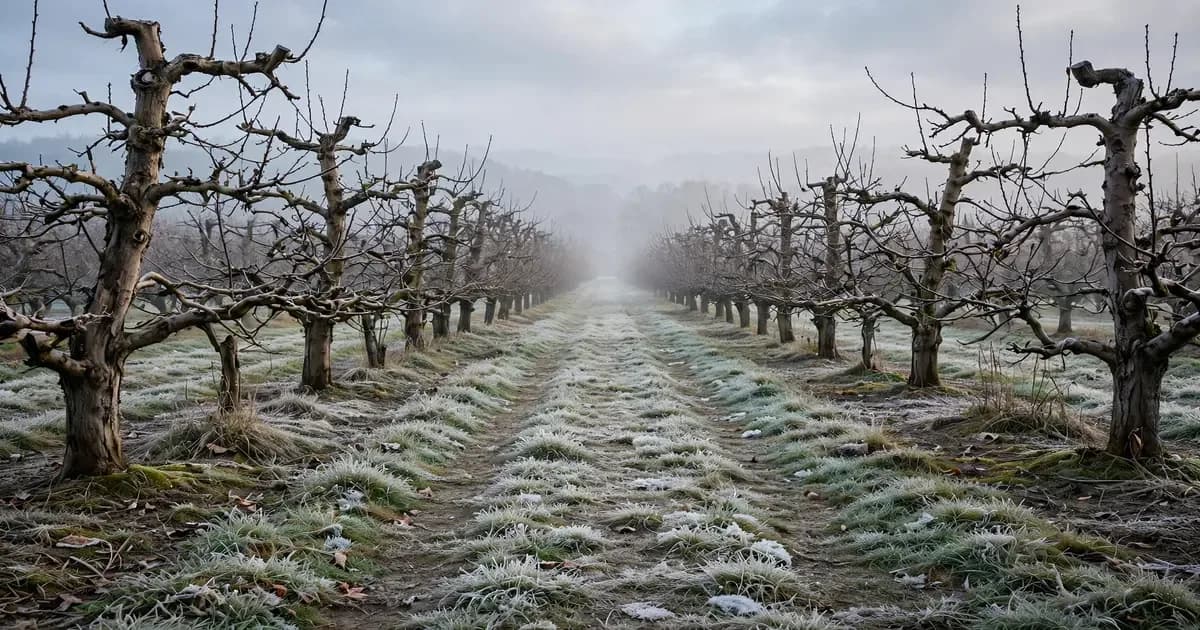
Apples and pears are pruned while dormant, from leaf fall to bud burst — roughly November to early March, says the RHS. With the leaves gone you can finally see the tree. The aim is a goblet: open centre, well-spaced branches, light and air through the middle.
- Dead, diseased, damaged first. Out they come, including any wood with canker. This is housekeeping, not shaping.
- Crossing branches next. Where two rub, keep the better-placed one. Rubbing wounds are doors for disease.
- Open the centre. Take out vigorous shoots growing inward. The tree fruits on light, not on shade.
- Shorten last year's growth. By a quarter to a third, just above an outward-facing bud. Leave the young side shoots — they carry next year's fruit buds.
- Stop at a fifth. The RHS limit is about 10 to 20 percent of the canopy a year. More pruning, more water shoots, less fruit.
Two more pruning deadlines hide in the calendar. Acers and grapevines bleed sap if cut late, so the RHS puts them before Christmas and January respectively — after leaf fall, before the sap rises. Birch, mostly, is best left alone entirely. And bleeding, when it happens, is mostly cosmetic. The cut heals; the panic is optional.
Bare-root trees, shrubs, hedging and roses are sold only while dormant — roughly November to March. Plant them the week they arrive, whenever the soil is neither frozen nor waterlogged. If a parcel lands in a frost, heel the plants in: roots covered with soil in a sheltered corner until the weather turns.
And the tulips. The RHS window runs September to December, and late is not a compromise: cold soil discourages tulip fire, the fungal disease that thrives in warm, damp autumn ground. Plant firm bulbs two to three times their height deep, pointed end up. Expect flowers a week or two later than October's — that is the whole cost.
The orchard has its own December ritual, and it is older than the secateurs. Wassailing — singing to the apple trees, pouring cider on the roots, hanging toast in the branches — is first recorded at Fordwich in Kent in 1585. Morris man Bill Taylor, who has led a Gloucestershire wassail since the 1990s, told Country Life: "It began with a few dozen folk gathering in a farmer's orchard and now there are up to 200 people wanting to take part." Prune in December, sing in January. The trees get both.
How Do You Protect the Garden Through December?
Wrap the pots, stay off the frosty lawn, and check everything after storms. December's damage is rarely dramatic — it is water in the wrong place, freezing. Pots crack, lawns scar, pond ice tempts a boot. The protections are small, cheap and mostly already in your shed.
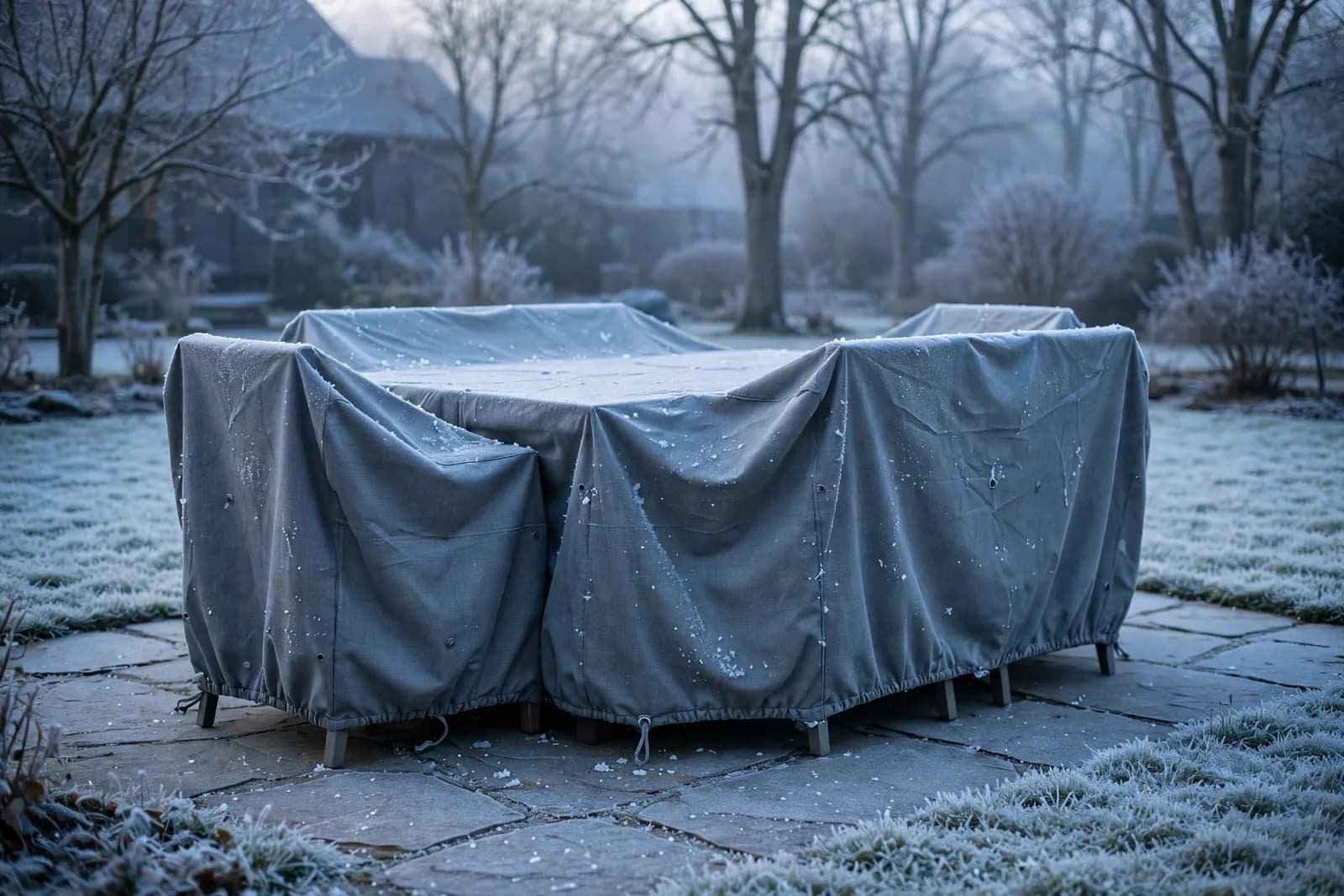
Pots first. Roots in a pot freeze far faster than roots in the ground, and wet compost that freezes can split terracotta clean in half. Raise pots on feet, take saucers off, and wrap the pot — not the plant — in bubble polythene or hessian at the first sign of frost, exactly as our winter container garden ideas set out.
The lawn asks for one thing: absence. Walking on frosted grass damages the blades and can leave brown footprints for weeks, says the RHS. Mow only in mild weather above 7°C, blades a notch higher than summer — and if you skipped the autumn tidy, our guide on how to prepare your garden for winter still covers it.
Mulch where the soil is bare: five to seven centimetres of compost or bark on moist, unfrozen ground, kept ten centimetres from woody stems so bark does not stay damp and rot. Brush heavy snow off conifers and light-limbed shrubs before it splays them. And if the pond freezes, melt a hole with a pan of hot water — never smash the ice; the shock harms what sleeps underneath.
After storms, walk the garden once. Check tree ties and stakes — winter wind loosens both, and a rocking root ball never establishes. Re-firm anything the frost has lifted; cold ground heaves shallow roots upward, and a boot-heel press and a dry mulch settle them again.
Small space, same rules. Pots on a balcony freeze from every side at once, so group them against the wall and wrap the group, not each pot. Our small balcony garden ideas cover the weight and watering rules for the coldest weeks.
| Prune in December | Leave until spring |
|---|---|
| Apples and pears (dormant) | Plums, cherries, apricots (silver leaf) |
| Acers and grapevines (before sap rises) | Hydrangeas (old heads protect shoots) |
| Climbing roses | Spring-flowering shrubs |
Honest note: most December job lists are padded. Half the jobs on them are November's leftovers or January's warm-up. The list above is the month. Everything else is optional, and some of it — tidying seed heads, cutting back perennials — is better left undone, as the next section argues.
What Should You Feed, Harvest and Leave Alone?
Feed the birds, harvest what is standing, and leave the sleepers sleeping. December's garden has tenants: birds working the short days, hedgehogs in the leaf piles, leeks and parsnips still in the ground. The jobs here are mostly about not disturbing them — with one exception, the feeders.
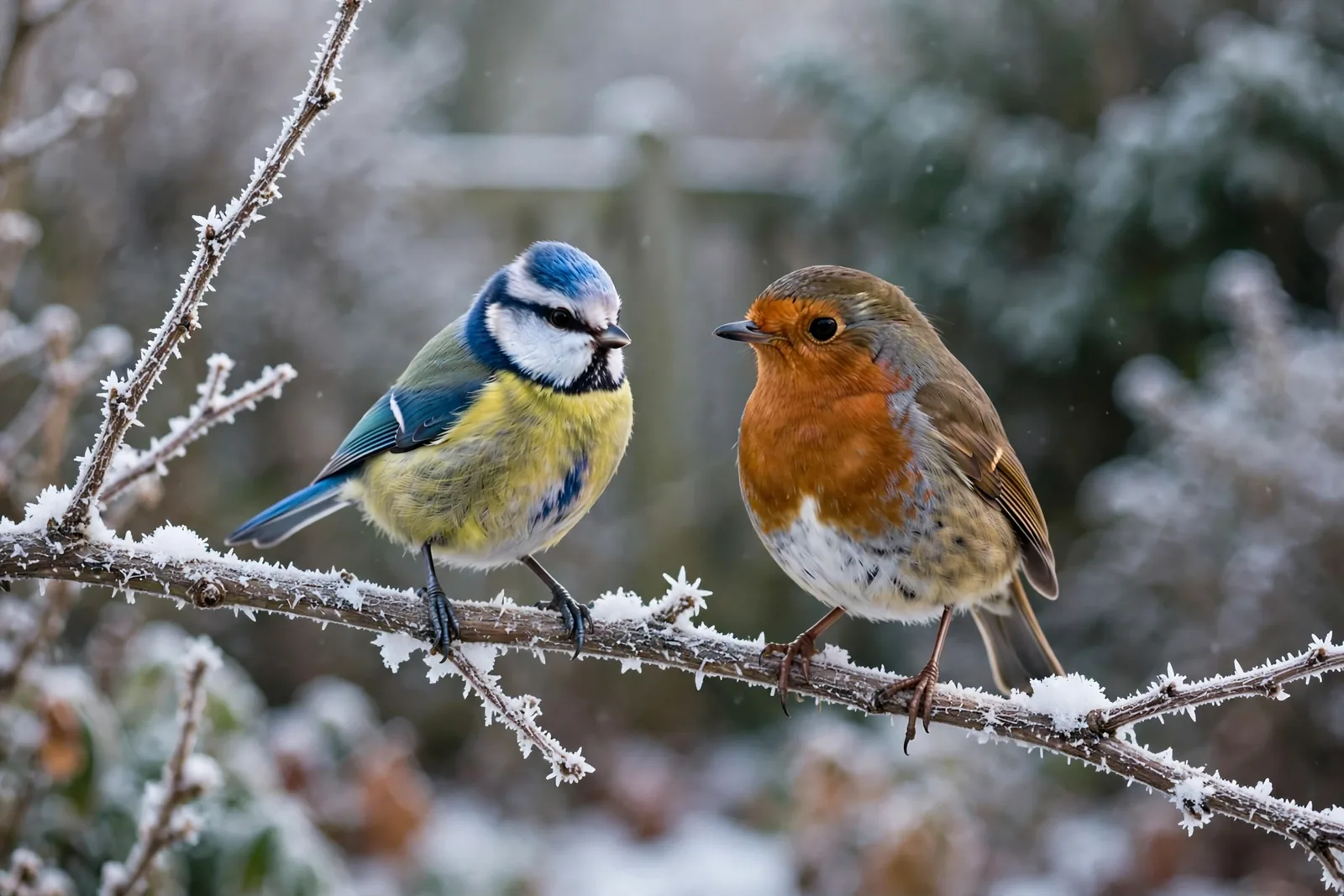
Birds first, because the days are shortest now. The RSPB's guidance is seasonal: from 1 November to 30 April, feed the full range — seeds, peanuts, suet, mealworms — and clean feeders weekly, because disease spreads fastest where birds crowd. Their guide to helping garden birds sets out the current rules.
Start now and January counts. The RSPB's Big Garden Birdwatch began in 1979 as a one-off for junior members; over 34,000 forms came back that first year, and it never stopped. RSPB communications officer Kay Hyde puts its value plainly: "The Big Garden Birdwatch is great fun but crucially it provides us with a scientific snapshot of how garden birds are faring in the UK." Greenfinches ranked seventh in 1979. By 2026 they had fallen to eighteenth.
The vegetable patch is a larder, not a job list. Leeks, kale, parsnips, sprouts and cabbages stand in the ground until you need them — frost improves several of them. Keep nets on the brassicas; pigeons turn to them when other food runs short. And leave hedgehog nests, leaf piles and the compost heap exactly as they are. December tidiness has a body count.
Houseplants count as tenants too. December light is the weakest of the year, so give them the brightest spot you have, water only when the compost is dry, and keep them off radiators. More houseplants die of December kindness — water, warmth, attention — than of neglect.
What Can Wait Until January?
Almost everything else. Seed ordering, tool sharpening, planning beds, the greenhouse deep-clean — December gives you the time, but none of it has a deadline. The month's real skill is knowing which jobs are not December's, and doing those on the wet days indoors, guilt-free.
Indoors, the useful list is short. Clean and oil the tools you just used for pruning — December sap and damp rust a blade by February. Order seeds while the catalogues are honest about what sold out last year. Pot an amaryllis now and it flowers in six to eight weeks, which is the closest thing to spring December offers.
And the tree. If it is a real one: saw about 2.5 centimetres off the base, stand it in water, top it up daily, keep it away from radiators. Cared for, it lasts about four weeks. Neglected, it sheds by Boxing Day — the one December job with a deadline measured in days.
Keep a garden diary, even a scruffy one. What flowered, what failed, which bed the slugs owned — December is when you still remember, and March is when you will swear you do. Two honest lines a month beat a beautiful notebook you never open.
So, by reader. If you have fruit trees, December is pruning month — one dry day, five cuts, done. If you have only pots and a balcony, December is wrap-and-wait: feet under, fleece ready, water rarely. If you have neither, December is birds and planning — feeders full, seed list written, conscience clear.
Frequently Asked Questions
Is it too late to plant tulips in December?
No. The RHS window for tulips runs September to December, and cold soil actually reduces tulip fire, the fungal disease of warm autumn planting. Plant firm bulbs two to three times their height deep. Flowers come a week or two later — that is all.
Can you prune plum and cherry trees in December?
No — leave stone fruit alone. Plums, cherries and apricots are pruned in summer, because silver leaf fungus enters through winter pruning wounds; its spores are active from September to May. Apples and pears are the December pruning job, not these.
Should you mow the lawn in December?
Only in mild weather above 7°C, with the blades a notch higher than summer — and never on frosted grass. Walking on frost damages the blades and can leave brown footprints for weeks. Most December lawns need nothing but absence.
What should you feed garden birds in December?
The full range: seeds, peanuts, suet, mealworms. The RSPB advises feeding fully from 1 November to 30 April, when natural food is short and disease risk is lower — and cleaning feeders weekly, because crowded feeders spread illness fastest.
Can you plant trees in December?
Yes — bare-root trees, shrubs, hedging and roses are sold only while dormant, roughly November to March. Plant whenever the soil is neither frozen nor waterlogged. If a frost arrives first, heel the plants in with roots covered until it lifts.
Conclusion
This weekend, pick one dry hour. Prune the apple tree, or wrap the pots, or fill the feeders — one deadline job, done properly. That is what to do in the garden in December: not everything, just the few things that cannot wait, in the shortest month of the year.