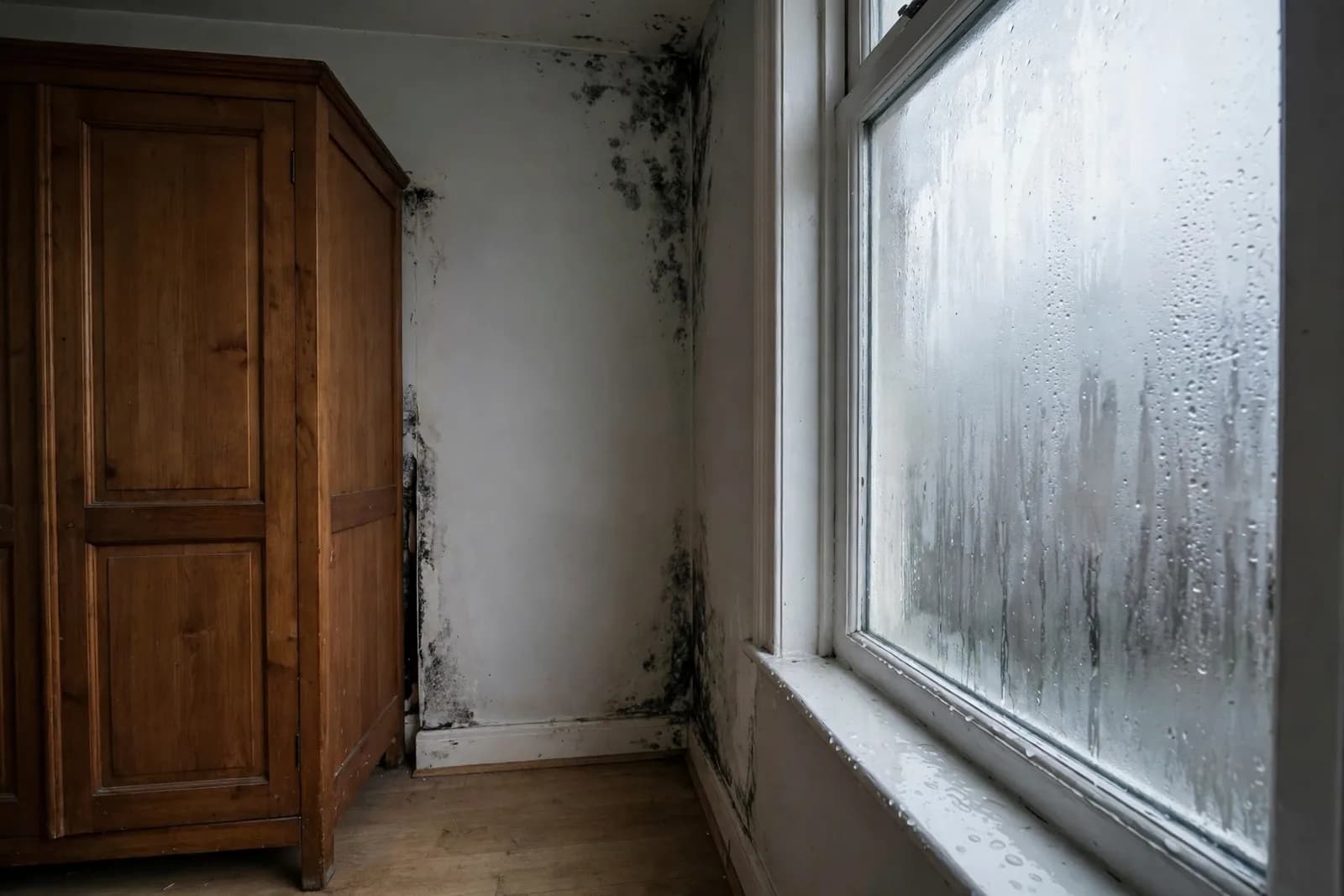
The black spots are back. You scrubbed them off the bedroom wall last month — bleach, a brush, half an hour of work — and this morning they are there again, in the same corner, behind the wardrobe, where the wall meets the ceiling. The instinct is to buy a stronger cleaner. The cleaner is not the problem.
Mould is a moisture problem that shows up as a cleaning problem. Kill the growth, by all means — but how to get rid of mould on walls for good is a different question, and its answer is water: find where the damp comes from, stop it, dry the wall, and only then clean. Do it in the other order and you are renting the result, not owning it.
Fix the moisture first, then clean: dry the wall, kill the growth with white vinegar or a mould remover, scrub it off wet, and dry the area within 24 to 48 hours. Keep indoor humidity below 60 percent, ideally 30 to 50. Clean a patch smaller than about 10 square feet yourself; anything bigger is a professional's job.
Why Does Mould Keep Coming Back?
Because the water never left. Mould spores are already in the air of every home; they germinate within 24 to 48 hours wherever a surface stays damp, and a typical household puts up to 100 litres of moisture into its air every week. Clean the wall without drying it and the next colony is a matter of days.
The water comes from three places, and the pattern tells you which. Condensation — warm, damp air meeting a cold wall — leaves black spots in corners, behind furniture, and on north-facing walls; it is the commonest cause, and our guide on how to stop condensation on windows covers the same physics on glass. Penetrating damp is a concentrated patch that grows when it rains — faulty guttering, cracked render, a slipped tile. Rising damp is a tidemark along the bottom of a wall, where groundwater has climbed through a failed damp-proof course. The first is a ventilation problem you can fix yourself; the other two are repairs.
Where it shows first is where the air is still and the surface is cold: bathroom ceilings, bedroom corners, the wall behind a wardrobe on an outside wall, the frame of a window that streams every morning. The black spot mould of condensation is usually Aspergillus niger, and it does not need a leak — humidity above 60 percent, sustained, is enough. That is why the same corner fails every winter: the room has not changed, so the result does not either.
It is worth taking seriously, because the spores are not cosmetic. The NHS links damp and mould to coughing, wheezing and shortness of breath, respiratory infections, allergies and asthma, sore eyes, eczema and fungal skin infections — and children living in a damp home are up to three times more likely to have breathing problems. In December 2020, two-year-old Awaab Ishak died in Rochdale from a respiratory condition caused by prolonged exposure to mould in his family's housing association home. The law that now bears his name — Awaab's Law, in force for social landlords in England since 27 October 2025 — requires emergency hazards to be made safe within 24 hours and significant damp and mould to be investigated within 10 working days.
The wall is reporting the water; the cleaner only edits the report.
What Actually Kills Mould on Walls?
White vinegar and proper mould removers, used wet and left to work. The US Environmental Protection Agency's guidance leads with detergent and water on hard surfaces — scrubbing removes the colony — and does not recommend bleach for routine mould cleanup. The agent matters less than the sequence: kill, remove, dry, and fix the water.
Why bleach fails on walls
Bleach is the product most people reach for, and on a wall it is the wrong one. It kills mould on hard, non-porous surfaces — tile, glass, metal — but a plastered wall is porous: the chlorine stays on the surface while the mould's root-like hyphae survive deeper in, and because bleach is mostly water, the wetting can feed the regrowth it was meant to stop. The stain lightens, the wall looks clean, and the colony underneath carries on. ServiceMaster's verdict, quoted by The Family Handyman, is blunt: bleach is only effective at killing surface mould, which allows it to grow back — sometimes stronger.
What works instead
White vinegar — about 5 percent acetic acid — soaks into porous material the way bleach cannot, and kills about 82 percent of known moulds, according to ServiceMaster. It needs time: spray it on undiluted and leave it a full 60 minutes before scrubbing. Hydrogen peroxide at 3 percent works in about 10 minutes and suits painted surfaces, though it can lighten coloured paint. Commercial mould removers do the same job with less smell. Two safety rules are absolute: never mix bleach with ammonia-based cleaners or with vinegar — both combinations produce toxic gas — and never use vinegar on natural stone, which it etches permanently.
| Method | Mix | Leave it | Works best on | The catch |
|---|---|---|---|---|
| White vinegar | Undiluted, ~5% acetic acid | 60 minutes | Painted plaster, grout, wood | Smell; not every species |
| Hydrogen peroxide | 3%, undiluted | 10 minutes | Painted walls, grout | Can lighten paint |
| Mould remover spray | As directed | As directed | Most walls | Cost; fumes |
| Detergent and water | Warm, soapy | Scrub at once | Hard surfaces | Removes, does not kill deep |
| Bleach | ≤1 cup per gallon (CDC) | A few minutes | Tile, glass only | Fails on porous walls; toxic if mixed |
And the size rule: the EPA puts the do-it-yourself line at about 10 square feet — roughly a 3-foot by 3-foot patch. Bigger than that, hidden inside a wall, or caused by sewage or flooding, and it is a professional's job. The EPA's guide to getting rid of mould states the principle the whole table rests on: "If you clean up the mold, but don't fix the water problem, then, most likely, the mold problem will come back."
How Do You Clean Mould Off a Wall, Step by Step?
Ventilate the room, put on gloves and a mask, wet the patch with your chosen agent, leave it to work, scrub the growth off with a disposable cloth, and dry the wall fast. The order matters: kill first, remove second, dry third — and never dry-brush, which spreads the spores you are trying to remove.
- Fix the water first. A leak, a drip, a cold wall with no ventilation — stop the source before you clean, or the clock restarts the moment you finish.
- Open a window and gear up. Gloves, a mask, and old clothes. If mould triggers your asthma, do not do this job yourself — Asthma and Lung UK's advice is to ask someone else or hire a specialist.
- Wet the patch and wait. Spray undiluted white vinegar (or your remover) until the growth is soaked, then leave it — 60 minutes for vinegar, about 10 for peroxide.
- Scrub it off wet. A disposable cloth or an old brush, working from the outside in, then bag the cloth and bin it — dead mould still triggers allergies, so removal is not optional.
- Dry the wall completely. A fan, an open window, or a dehumidifier — the EPA's rule is to dry water-damaged areas within 24 to 48 hours, because that is how fast mould starts again.
- Only then repaint — if at all. Anti-mould paint slows regrowth on a dry wall; on a damp one it seals the problem in. Paint is the last step, never the first.
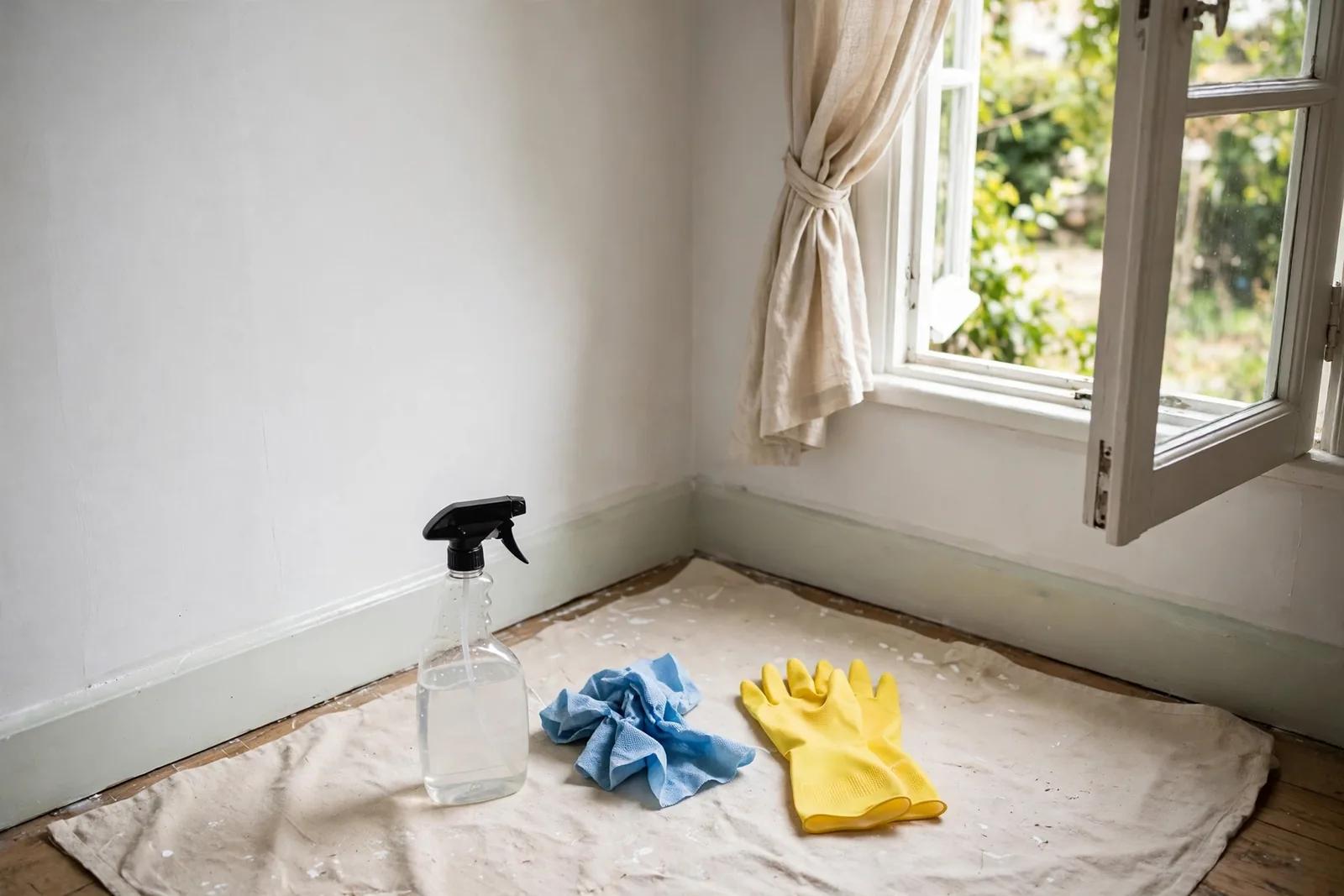
Then measure, because guessing is how the patch wins. A cheap hygrometer tells you the room's number: below 60 percent is the EPA's ceiling, 30 to 50 the target. If a bedroom sits above 60 all winter, no cleaner will hold the line — the room needs ventilation, warmth, or a dehumidifier set to about 50 percent, in that order.
Two surfaces break the rules. Wallpaper with mould behind it cannot be cleaned through the paper — the EPA's advice for porous materials that stay mouldy after cleaning is to discard them, and wallpaper is one of them. Bathroom silicone is the other: mould grows into the sealant itself, so scrubbing the surface only buys a few weeks. Cut the old silicone out and reseal; it is a twenty-minute job that ends the argument.
How Do You Stop It Coming Back?
By keeping the wall dry: ventilate the room, hold indoor humidity below 60 percent — ideally 30 to 50 — and warm cold surfaces so moisture has nowhere to settle. Mould needs water more than it needs anything else; take the water away and the spores in the air have nothing to grow on.
Ventilation does most of the work: trickle vents open, extractor fans running while you cook and shower and for 15 minutes after, windows open five minutes a few times a day. Sealing draughts helps the warmth but not the damp — the same sealing that keeps heat in can trap moisture in, which is why our renter-friendly guide to soundproofing a room cheaply insists on the distinction: seal the gaps, not the ventilation. Warmth helps too: a cold wall collects condensation the way cold glass does, and our guide on how to keep house warm without heating covers holding a room at 18°C without the boiler. And move furniture a few centimetres off outside walls — the still, cold pocket behind a wardrobe is where bedroom mould starts.
Renters: persistent damp and mould are the landlord's repair, not your weekend job. Report them in writing, with dated photos, and keep a copy — and since Awaab's Law, social landlords in England must investigate significant damp and mould within 10 working days and make emergency hazards safe within 24 hours. Call a professional instead when the patch is bigger than about 10 square feet, when the mould is hidden inside a wall, when sewage or flooding caused it, or when the same spot keeps returning after two cleans — that last one is not a cleaning failure. It is a moisture failure.
Frequently Asked Questions
Does bleach kill mould on walls?
On tile or glass, yes. On a plastered wall, no — bleach kills only the surface growth while the roots survive in the porous plaster, and its water content can feed regrowth. The EPA does not recommend bleach for routine mould cleanup.
Is mould on walls dangerous?
It can be. The NHS links damp and mould to coughing, wheezing, respiratory infections, allergies and asthma, and children in damp homes are up to three times more likely to have breathing problems. People with asthma or weak immunity should not clean it.
How long does mould take to grow?
Fast: spores germinate within 24 to 48 hours on a damp surface, which is why the EPA's rule is to dry water-damaged areas within that window. Visible colonies follow within days, and by then the roots are already inside the wall.
Can you paint over mould?
No — paint seals the growth in and it grows through. Kill it, remove it, dry the wall, and fix the damp first; then anti-mould paint slows regrowth on dry walls. Painted over damp, it is a lid on the problem, not a fix.
When should you call a professional?
When the patch is bigger than about 10 square feet, the mould is hidden inside a wall, sewage or flooding caused it, or the same spot returns after two cleans. Renters should report persistent damp and mould to the landlord in writing instead.
Conclusion
This weekend, find the water: run a hand over the cold corner, check behind the wardrobe, and open the trickle vents. Then clean the patch wet, dry the wall, and keep it dry. That is how to get rid of mould on walls — not a stronger cleaner, but a drier wall. The cleaner only edits the report; the water writes it.


