November is the month the garden asks for an hour of your time and pays it back all spring. The work is not glamorous — fleece, mulch, a rake, a pair of secateurs — but the difference between a garden that was put to bed and one that was left is visible by March: one wakes up, the other starts again from nothing.
Most of it fits into one weekend, and half the jobs are about not doing things. This guide shows how to prepare garden for winter in four verbs: protect, cut, plant, put away — in that order, because the frost does not wait for the tidying.
To prepare your garden for winter, protect tender plants with fleece and mulch before the first frost, cut back only collapsed or diseased growth, plant tulips and bare-root trees while the soil is still warm, and put tools, taps and the lawn to bed. Leave seed heads standing for birds — a tidy garden is not always a healthy one.
What Needs Protecting Before the First Frost?
The tender plants first: dahlias, cannas, pelargoniums, fuchsias and anything tropical. Lift them, move them under cover, or wrap them in fleece before the first frost blackens their leaves. Hardy shrubs and roses need no cover at all — they need the cold to go dormant properly.
In most of England and Wales the first frost lands between late October and mid-November, a little earlier in Scotland and on higher ground, a little later in coastal and city gardens. That first frost is the dangerous one: as the days shorten, plants build up sugars and amino acids that act as antifreeze, and after several days of gradual cold they can even let their cell contents superfreeze — stay liquid below freezing point. A sudden frost after a mild spell catches them before any of that happens — which is why even hardy plants can be damaged by the first cold night. The RHS sets the mechanism out in its guide to frost damage, which we checked while writing.
The tender list
Lift tender perennials before the first frosts: dahlias, cannas, pelargoniums, fuchsias. If frost has already blackened a dahlia's leaves, the roots are still alive — lift the tubers, dry them, store them cool and frost-free. Bananas and tree ferns can be wrapped where they stand; anything in a pot moves under cover. A greenhouse earns its keep now: plants overwintered inside need insulation or a little heating, and clean glass so the weak winter light gets through.
Fleece, mulch and where things stand
Cover tender plants with a double layer of horticultural fleece, or an old sheet, when frost is forecast — on before sunset, so the day's warmth stays trapped underneath, held off the leaves with canes, off again in the morning. Fabric lying on the foliage conducts the cold straight in, and clear plastic touching the leaves is worse than nothing. Mulch the root area of evergreens, conifers and tender shrubs with a thick layer of organic matter so the ground does not freeze solid around them.
Where a plant stands matters as much as what covers it: the base of a south-facing wall is the warmest spot you own, the north side of the house the coldest and wettest. Cold air flows downhill and pools at the lowest point or against a barrier — a frost pocket — so never put a tender plant there. And keep early-flowering magnolias and camellias out of the morning sun: frozen buds that thaw too fast blacken and drop.
Pots, taps and structures
Pots freeze faster than the ground — cold reaches the roots from every side. Group containers against a sheltered wall, wrap the pots in bubble polythene or straw, raise them on feet and take the saucers off. The full routine, including which plants survive a winter pot at all, is in our winter container garden ideas.
Before winter, check the structures too: loose fence panels, shed roofs, trellis and posts. A solid fence that catches the wind can be worse than a gap — the RHS suggests fences around 50 percent wind-permeable, so gusts pass through instead of shaking the run. A hedge makes the best permanent windbreak, and our backyard privacy ideas cover the planting that does double duty as shelter and screen.
What Should You Cut Back — and What Should You Leave Alone?
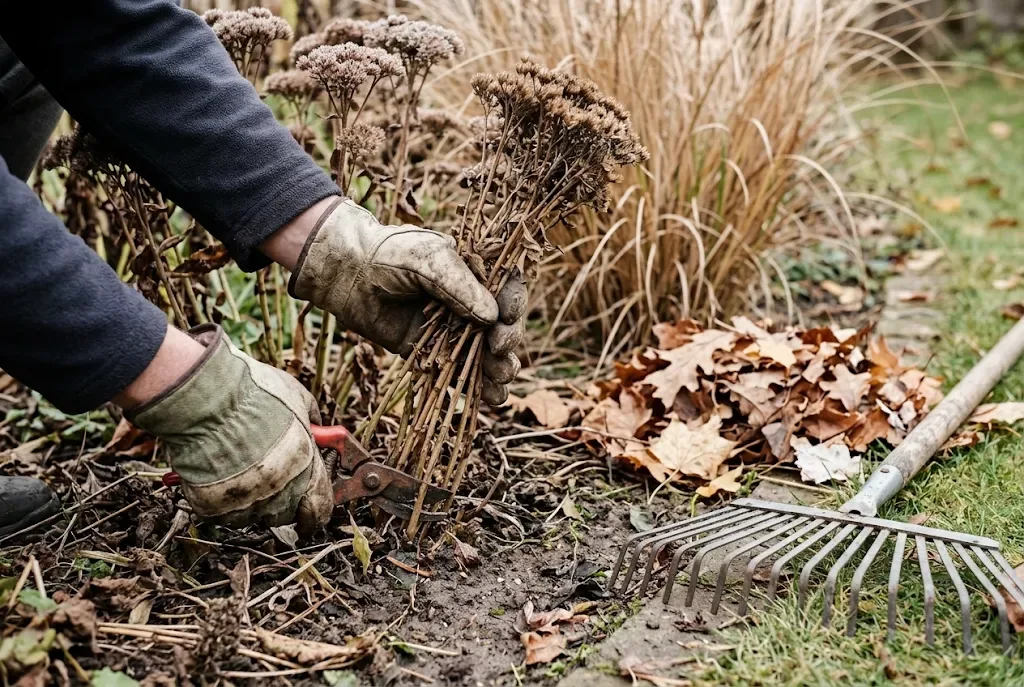
Cut back what has collapsed, what is diseased, and what will rot wet against the crown. Leave everything else: sturdy seed heads feed birds, hollow stems shelter insects, and last season's growth on tender plants like penstemon is itself frost protection. Tidiness is a look, not a requirement.
Cut now
Collapsed perennials go first — anything that has flopped into a wet mat will rot against the crown and invite slugs. Diseased material goes with it, and off the garden, not onto the compost: leaves from a rose with blackspot carry the disease into next year. Anything soft and sappy that a frost will turn to mush is better cut now than cleared in spring.
Leave until spring
Sturdy seed heads stay: echinacea, sedum, alliums, ornamental grasses, teasels. They feed the birds through the thin months, shelter insects in their hollow stems, and look better in frost than any bare border. Leave last season's growth on tender plants like penstemon until spring — the RHS is explicit that it protects the plant through winter. And leave the leaves under the hedges and in the quiet corners: hedgehogs and insects winter there.
Leaves and mulch
Leaves on the lawn and paths are a different matter: a wet carpet of them blocks the light, encourages disease and turns paths slippery. Rake them up and make leaf mould — pile them in a wire bin or a bag with holes and leave them: most leaves take about two years to rot down fully, and the result is the best soil improver you will ever get for free. A rotary mower with a collection box shreds lawn leaves as it picks them up, so they rot faster.
Then mulch the bare soil: 5–8cm of garden compost, well-rotted manure or leaf mould, spread while the ground is moist and not frozen. Mulch holds the warmth in, stops heavy rain compacting the soil, and feeds the worms that do the digging for you. On a bare vegetable patch, green manure — mustard sown in September — holds the nutrients over winter and is dug back in come spring; missed September, mulch is the fallback.
| Job | Now or spring? | Why |
|---|---|---|
| Collapsed perennials | Cut now | Wet mats rot against the crown |
| Diseased leaves (e.g. blackspot) | Clear now, off the garden | Stops disease returning next year |
| Sturdy seed heads | Leave until spring | Bird food, insect shelter, frost structure |
| Ornamental grasses | Leave until spring | Shelter, and they look good in frost |
| Penstemon growth | Leave until spring | Last season's growth is frost protection |
| Leaves on the lawn | Rake now, make leaf mould | Wet leaves smother grass and spread disease |
| Leaves under hedges | Leave where they fall | Hedgehog and insect shelter |
Read the table by what the plant needs, not by what looks neat: the garden that feeds the birds in January is the one that wakes up first in March.
[IMAGE 2: cutting-back-perennials-autumn.jpg]
What Can You Still Plant in November?
November is still planting month. Tulips go in now — they prefer the cold soil — and bare-root hedging, trees, roses and fruit bushes go in while they are dormant and the soil is still warm enough for roots to settle. Daffodils are late now, but a bulb in the ground still beats one in the shed.
Tulips now, daffodils anyway
Tulips are the November bulb: they want cold soil, and November planting suits them. Daffodils wanted September, crocus and hyacinth with them — but if the bulbs are still in the shed and the ground is not frozen, plant them anyway. A late bulb flowers; a bulb in a bag does not. The depth rule is the RHS one: about three times the bulb's own height, pointed end up, in soil that drains.
Bare-root trees, hedging and fruit
November is the month for bare-root planting — hedging, trees, roses and fruit bushes, lifted while dormant and planted straight into soil still warm from summer, with the rain doing the watering. Strawberries, raspberries, blackberries, currants and blueberries all go in now. November is also one of the best months for moving established trees, shrubs and perennials: dormant, rain-softened ground, and months to settle before spring asks anything of them.
Why autumn planting works
Two reasons, both about the soil: it is still warm enough for roots to grow while the top of the plant sleeps, and the rain does the watering, so a new plant establishes without a summer of hoses. A tree planted in November has five months of root growth before its first leaf; the same tree planted in April has none. That is the argument for planting now instead of waiting for spring.
How Do You Put the Garden to Bed?
The lawn, the tools and the water. Give the grass its last cut on a dry day with the blade raised, clean and oil the tools before they rust in the shed, and drain the outside taps before the first hard freeze splits a pipe. One weekend, done properly, and the garden sleeps well.
The lawn's last cut
Grass keeps growing in mild spells, so there is usually a final cut in late October or November. Raise the blade to about 5cm and only cut when the grass is dry — a short, wet cut scalps the lawn going into winter. Keep the leaves off it, and give it an autumn feed: low in nitrogen, high in potash, which hardens the grass against cold instead of pushing soft growth the frost kills. The repair window — scarifying, aerating, overseeding — was September and October, while the soil was warm and moist; if you missed it, the lawn waits until spring, though a fork pushed into compacted patches every 10–15cm still helps drainage now.
Tools, taps and water
Clean the tools before they spend four months in the shed: brush or wash the soil off spades, forks and hand tools, let them dry thoroughly, oil the metal and sharpen the blades. Clean secateurs properly — sap and soil left on a blade rusts it by spring. Then the water: disconnect hoses and drain them, turn off outside taps at the isolation valve inside the house and open the tap to drain it, or fit an insulated cover. Water butts should be emptied a little so ice has room to expand.
The pond and the wildlife
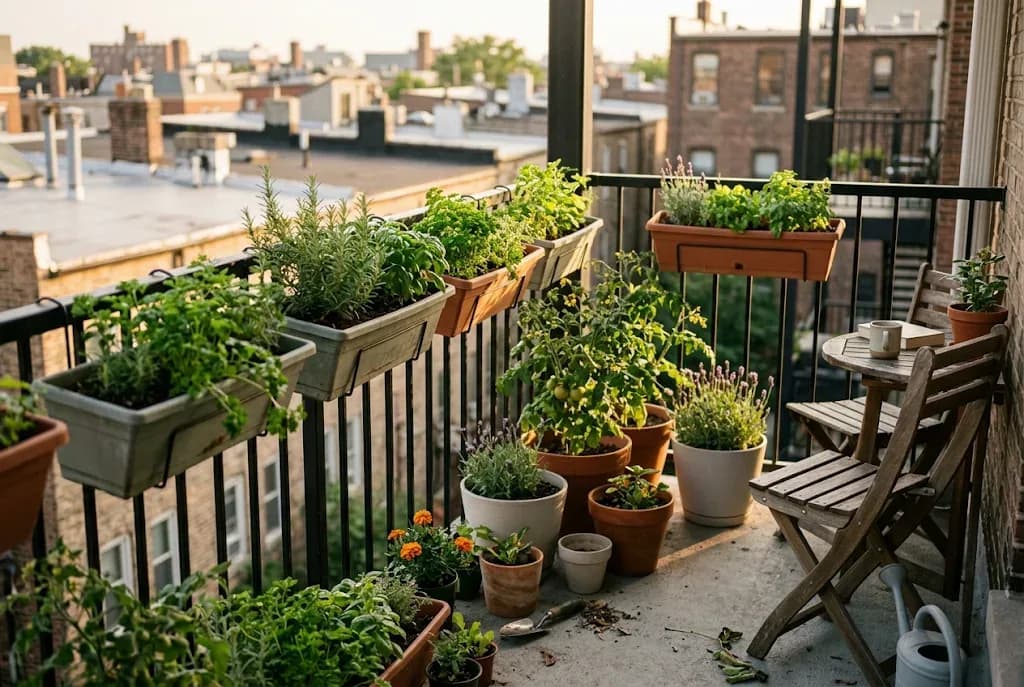
Net the pond before the main leaf fall, or fish the leaves out before they sink and rot. If it freezes over, melt a small hole with a pan of hot water rather than smashing the ice — the shock harms the fish, and the hole lets gases escape. Top up the bird feeders as natural food thins out, and check any bonfire heap for hedgehogs before lighting it. On a balcony, the whole put-to-bed job is pots and wind: group the pots against the wall, wrap the tender ones, and read our small balcony garden ideas for the weight and watering rules.
The final-weekend checklist
- Saturday morning — lift and fleece. Tender perennials lifted or wrapped, pots grouped and wrapped, greenhouse insulation checked. Frost jobs first, always.
- Saturday afternoon — cut and rake. Collapsed and diseased growth out, leaves off the lawn and paths, leaf mould bin filled, seed heads left standing.
- Sunday morning — mulch and plant. Mulch on bare soil, tulips in, bare-root trees and fruit in while the soil is still warm.
- Sunday midday — the lawn. Final cut on dry grass, blade raised, autumn feed scattered.
- Sunday afternoon — water. Hoses drained and stored, taps off and drained, water butt lowered, pond netted.
- Sunday evening — tools and feeders. Tools cleaned, oiled and sharp; feeders topped up; the shed shut on a garden that is ready.
And if you do nothing? Hardy plants will mostly cope — they evolved for this. Tender plants die, pots crack, taps split, tools rust, and the lawn thins where the leaves sat. The garden recovers by summer either way. The hour in November is not about saving the garden; it is about not having to replace the plants and tools in March.
Frequently Asked Questions
When should you start preparing your garden for winter?
Start in late October and finish by late November. In most of England and Wales the first frost lands between late October and mid-November — earlier in Scotland and on high ground, later in coastal and city gardens. Do the frost-sensitive jobs first.
Should you cut back all perennials in autumn?
No. Cut back only what has collapsed or is diseased. Leave sturdy seed heads and hollow stems standing — birds eat the seeds and insects shelter in the stems — and leave last season's growth on tender plants like penstemon until spring.
Is it too late to plant tulips in November?
No — November is the best month for tulips; they prefer cold soil, and daffodils are the ones that wanted September. Plant both while the ground is not frozen, at three times the bulb's own height deep.
Do you need to water the garden in winter?
Rarely. Rain does most of it, and evergreens in pots are the exception — check them weekly and water on a mild morning if the compost is dry. Never water the day before a frost, and never leave pots standing in saucers of water.
What happens if you do nothing to prepare the garden?
Hardy plants will mostly cope — they evolved for this. Tender plants die, pots crack, taps split, and tools rust. The garden recovers by summer, but you will have replaced plants and tools that an hour of November work would have saved.
Conclusion
A garden put to bed in November wakes up in March; a garden left to itself starts again from nothing. This weekend, do the frost jobs first — lift the tender plants, fleece what stays out, wrap the pots. The tidying can wait a week. The frost will not. That is how to prepare garden for winter: protect, cut, plant, put away — then let it sleep.