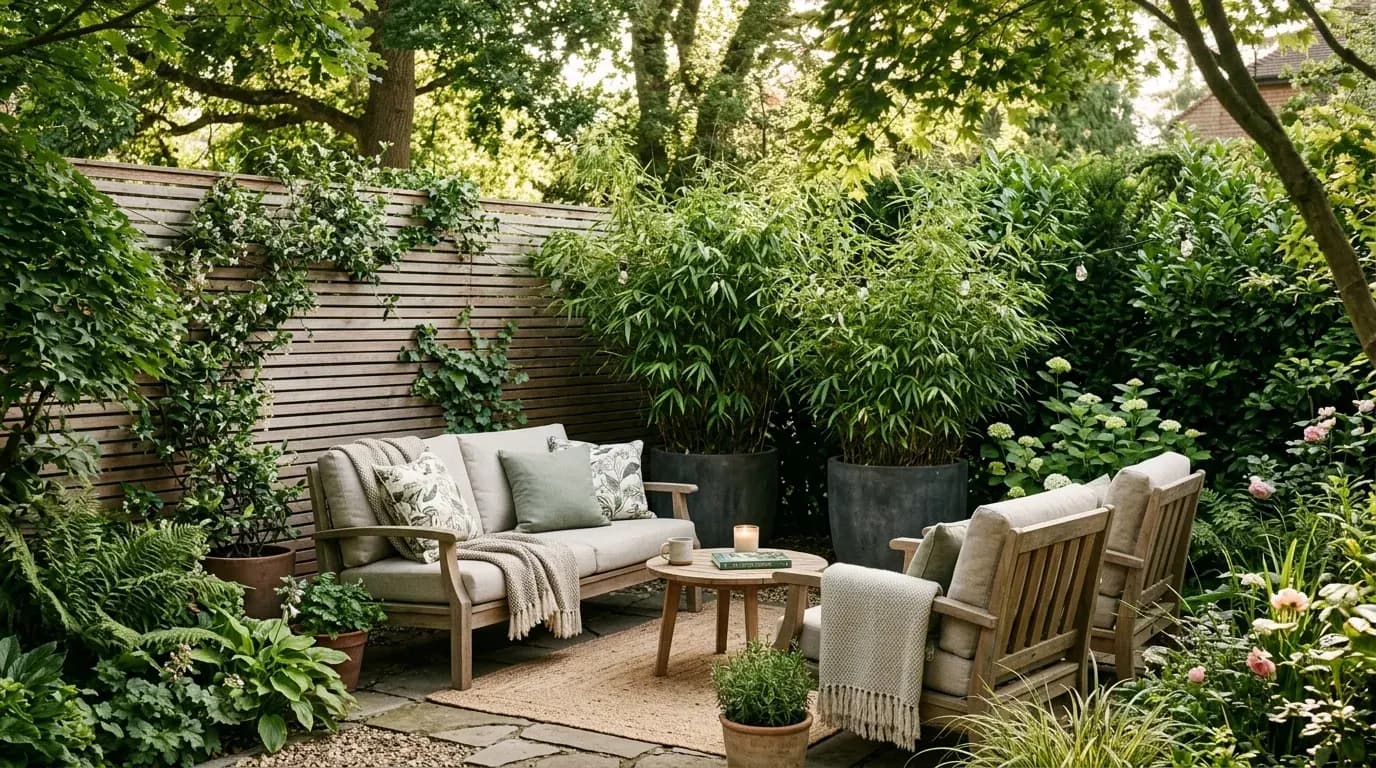
A pergola is lovely. It is also a building project — posts, footings, weekends, and a bill that makes you sit in the sun a while longer just to afford it. Here is the good news: almost every job a pergola does can be done by something cheaper, faster and removable. This guide walks through nine patio shade ideas that need no pergola at all — from a cantilever umbrella you can open this afternoon to a shade sail that will outlast the patio furniture — with honest notes on what each one costs in money and effort, and where each one fails.
At a Glance
| Idea | Effort | Renter-friendly? |
|---|---|---|
| Cantilever umbrella | Low | Yes |
| Pop-up canopy | Low | Yes |
| Shade sail | Medium | Only with landlord's OK on anchors |
| Outdoor curtains / roller shades | Low | Yes |
| DIY retractable cable shade | Medium–high | No |
| Retractable awning | Pro install | No |
| Freestanding gazebo | Medium | Usually |
| Potted shade trees | Low, but slow | Yes |
| Trellis + vines | Low, but slow | Mostly |
What Is the Best Way to Shade a Patio Without a Pergola?
The best patio shade is the one that covers the hours you actually sit outside: a shade sail or retractable awning for all-afternoon cover, a cantilever umbrella for flexible seating, and side screens or curtains when the evening sun slides in low. Judge every idea by three things — UV block, coverage and anchoring.
First, the fabric's UV rating. Shade only counts when the material blocks at least 90% of the sun's UV. Plenty of pretty shade cloth blocks 40% or so — that cuts glare, not heat, and you will feel the difference by lunchtime. Proper sail fabric (knitted HDPE) is rated at 90–95%.
Second, coverage bigger than the furniture. The sun does not stay overhead; it slides west all afternoon, and your shade should slide with the maths. For a dining set, plan roughly 30–36 inches of shade beyond the chairs on every side, or the seats at the edge spend the evening half in, half out.
Third, anchoring. Every shade is a sail in the wind. Umbrellas live or die by their base weight, sails by their anchor points, canopies by their tie-downs. Most shade failures are not fabric failures — they are anchoring failures that somebody skipped to save twenty minutes.
What Are the Best Patio Shade Ideas, From Cheapest to Most Permanent?
Ranked roughly by money and effort, the nine ideas that actually work are a cantilever umbrella, a pop-up canopy, a shade sail, outdoor curtains, a DIY cable shade, a retractable awning, a freestanding gazebo, potted shade trees, and layered planting. Each one below gets the same honest treatment: what it costs in effort, and where it fails.
- Cantilever umbrella. The fastest real shade there is: no pole through the table, the canopy hangs over the seating, and it rotates as the sun moves. The catch is the base — a 9-foot umbrella needs roughly 50–75 pounds of base weight, more in a windy spot. Skimp there and the first gust redecorates your neighbour's yard.
- Pop-up canopy. The cheapest instant shade, up in fifteen minutes, perfect for parties and renters. Honest verdict: it is a stopgap. It looks temporary, it hates wind, and it is not what your patio will be using in three summers — but for this weekend, nothing beats it.
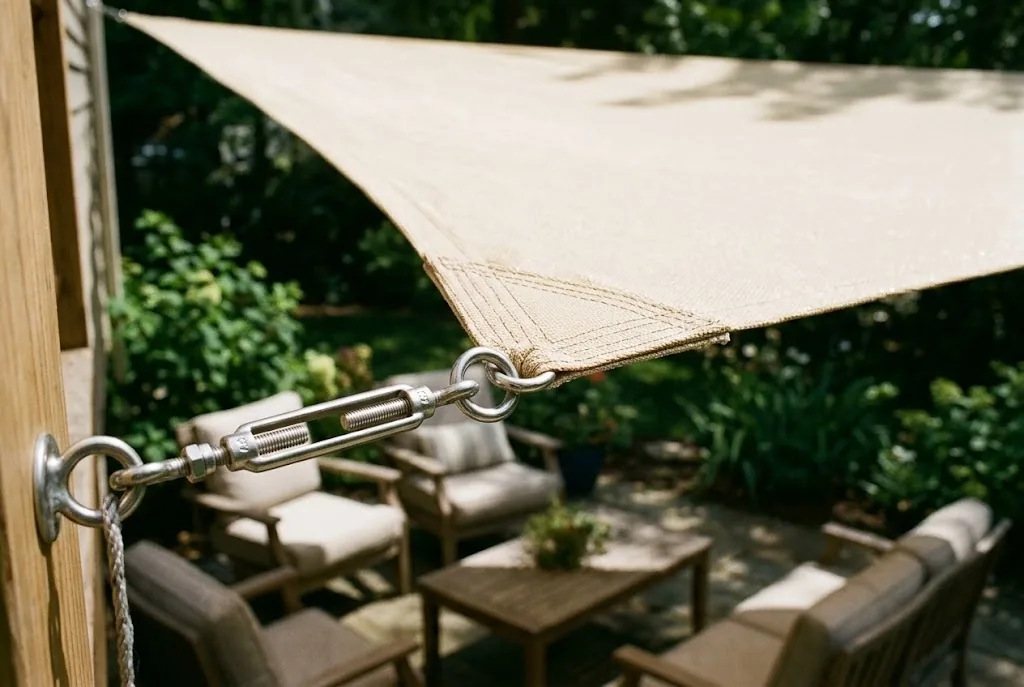
- Shade sail. The best value on this list. A triangle or rectangle of HDPE fabric, tensioned between the house, poles or trees, blocks 90–95% of UV while letting hot air breathe through — Coolaroo's shade sail range, endorsed by Cancer Council Australia, is built on exactly this fabric. Two rules decide success: real anchor points, and a slope (a twist, with corners at different heights) so rain runs off instead of pooling. A high sail also steals the view from a neighbour's upstairs window — the same sightline trick our guide to backyard privacy without a fence uses from the other direction.
- Outdoor curtains and roller shades. Overhead shade does nothing about the low evening sun, which arrives sideways. Curtains on a cable or a roller shade on the patio's open edge fix exactly that, and they add privacy in the same move. Renter-friendly, cheap, and the most commonly forgotten half of a shade plan.
- DIY retractable cable shade. The pergola-free pergola: stainless cables run between two walls or posts, fabric panels hang from them and slide — out for shade, back for open sky and winter sun inside the house. It is a genuine weekend project (the cables, not the fabric, are the work) and it needs two solid structures to anchor to, which is why it sits mid-list on effort.
- Retractable awning. The polished answer for a patio against the house wall: shade on demand over doors and dining sets, gone when you want the sun. Size it wider than the door opening and mind the projection — a shallow awning shades the threshold and misses the table. It is also the priciest idea here, and it bolts to the house, so renters are out.
- Freestanding gazebo or cabana. A complete shaded room that touches nothing — no wall fixings, no posts in the ground if it is weighted properly. Best where the patio sits away from the house. The failure mode is wind: a gazebo is a kite with furniture ambitions, so anchor it like you mean it.
- Potted shade trees. A dwarf olive, citrus or Japanese maple in a genuinely large pot gives living shade you can move — and take with you when you move. The honest weakness is time: a potted tree shades a chair in year one and a table in year three. Buy the biggest pot and the biggest tree the budget allows.
- Trellis and vines at the sunny edge. A freestanding trellis clothed in jasmine, grape or another fast climber throws dappled side shade and cools the air around it. It is the slowest idea here and the prettiest — and it is the same structure that carries the trellis-and-vine privacy screen in our privacy guide, doing two jobs on one frame.
Which Patio Shade Should You Choose for Your Situation?
Match the shade to the constraint, not the catalogue photo. Renters should stay with umbrellas, canopies and curtains that leave no holes. West-facing patios need an awning plus a side screen, because evening sun comes in under any roof. Big open yards belong to sails; small patios belong to cantilevers.
- You rent: cantilever umbrella + outdoor curtains. Full shade, zero holes, everything leaves with you.
- Small patio, one dining set: cantilever umbrella. A sail's anchor geometry eats small patios; an offset umbrella doesn't.
- West-facing patio: retractable awning for the top, roller shade or curtains for the side. West sun is a two-direction problem.
- Big, open, sunny yard: shade sail — or two, overlapped at different heights. Nothing else covers that much ground for the money.
- Windy site: a low, well-tensioned sail with serious anchors, or potted trees. Umbrellas and pop-ups will not survive your weather, and a gazebo needs anchoring like a boat.
- Tight budget, handy with tools: the DIY cable shade. The materials are modest; your weekend is the currency.
- You want it to look designed, not improvised: one idea, repeated cleanly — a single rectangle sail, or an awning matched to the house — beats three different shades fighting each other.
What Mistakes Make Patio Shade a Waste of Money?
Most patio shade disappoints for one of five reasons: the fabric blocks too little UV to matter, the shade is smaller than the furniture it covers, a sail hangs flat and pools rain, an umbrella base is too light for the first windy evening, or nobody planned for the low evening sun.
- Buying glare cloth. Fabric rated around 40% block is decoration. Check the number on the label — 90% and above is shade; below that is a suggestion.
- Sizing to the table, not the people. Shade that ends at the table's edge abandons the outer chairs by mid-afternoon. The 30–36 inch margin in section one is not a luxury; it is the product.
- The flat sail. A sail hung level looks tidy on day one and holds a rain pond by day ten. The pond stretches the fabric, the fabric sags further, and the anchors take loads they were never meant for. Slope is structural, not cosmetic.
- The featherweight base. Umbrella bases are sold by the product photo, not by physics. If the base feels easy to carry, it is too light for the umbrella it is holding.
- Forgetting the sun moves. A patio perfectly shaded at noon can be fully exposed at five. Before buying anything permanent, watch your patio at the hours you actually use it — that one observation is worth more than any product review, including ours.
Frequently Asked Questions
Do shade sails actually cool a patio?
Yes, in two ways at once. The knitted HDPE fabric blocks up to 95% of UV, and because it breathes, hot air escapes through it instead of pooling underneath the way it does under a roof. The shade works, and the air keeps moving.
What is the cheapest way to shade a patio?
A pop-up canopy or a market umbrella on sale — either can shade a seating area this weekend for the price of a takeaway. Just know what you bought: a stopgap that hates wind, not the shade your patio will be using in three summers.
Can renters shade a patio without drilling?
Yes — almost everything flexible on this list is renter-safe: cantilever umbrellas, pop-up canopies, curtains on tension cables, potted trees and planter screens all leave with you. What renters should skip is anything bolted down — fixed awnings, sail posts and permanent frames.
How much bigger than my furniture should the shade be?
Bigger than feels necessary. Sun angles shift all afternoon, so shade sized exactly to the table abandons the chairs by four o'clock. For dining, plan roughly 30 to 36 inches of shade beyond the chairs on every side — more on west-facing patios.
Does a shade sail need a slope?
Yes — a flat sail is a rain pond waiting for its first storm. Give it a twist, with diagonal corners at different heights, or a fall of roughly 20% across the span, so water runs off and the fabric stays tensioned without sagging.
Conclusion
You do not need a pergola; you need shade where you sit, at the hours you sit there, made of fabric rated to block the sun and anchored like the wind is real. Start this weekend with the cheapest honest test: sit on your patio at your usual hour, note exactly where the sun lands, and measure your furniture plus its 30-inch margin. That one observation tells you which of the nine ideas is yours — and it costs nothing but a cup of tea in the heat.