Most calm rooms you save online are chasing the same idea: Japandi interior design, the blend of Japanese minimalism and Scandinavian warmth that has become the default language of relaxed modern homes. It is not about buying a look. Japandi means low, well-made furniture, honest natural materials, warm neutral color and space left deliberately empty. This guide explains what the style is, the principles behind it, and the exact order to apply them in your own rooms — living room and bedroom included — plus the mistakes that turn Japandi into a beige showroom, and where the style is heading in 2026, including its darker new direction.
At a Glance
| Element | The Japandi approach |
|---|---|
| Roots | Japanese wabi-sabi restraint + Scandinavian hygge comfort |
| Palette | Warm off-white, oatmeal, stone and greige, with charcoal and dark wood for depth |
| Furniture | Low, simple, well-made; solid wood with visible craft |
| Materials | Wood, linen, wool, cotton, paper, stone, clay, bamboo, rattan |
| Light | Maximized daylight; soft, diffused, layered artificial light |
| Decoration | Very few objects, each useful or handmade; empty space is part of the design |
What Is Japandi Interior Design?
Japandi interior design is a hybrid style that fuses Japanese minimalism with Scandinavian comfort: low furniture, natural materials like wood, linen and stone, a warm neutral palette and uncluttered rooms where every object earns its place. It pairs the Japanese idea of wabi-sabi — beauty in imperfection — with Scandinavian hygge, cosy everyday ease.
The name is a blend of "Japan" and "Scandi", but the relationship behind it is much older than the label. Japanese craft has influenced Danish design since the late 19th century — Designmuseum Danmark documented that exchange in its Learning from Japan exhibition, showing how Japanese simplicity shaped the Danish furniture tradition decades before anyone said "Japandi". The modern style simply reunites two traditions that were never really strangers.
Five principles define the Japandi interior design style wherever it appears:
- Less, but better. Fewer objects, each chosen for quality and use. Nothing is purely decorative; a beautiful object that does nothing does not belong.
- Natural, honest materials. Wood with visible grain, linen, wool, stone, clay and paper. Veneered imitations and glossy plastic break the spell instantly.
- Low and grounded. Furniture sits close to the floor — sofa seat heights around 38–42 cm rather than the standard 45 cm — which calms sightlines and makes ceilings feel higher.
- Warm neutrals with contrast. A pale base of off-white, oatmeal and light wood, grounded by darker accents: walnut, charcoal, deep brown. All one tone is the most common failure.
- Negative space. Empty floor, bare wall sections and clear surfaces are not gaps to fill; they are the ingredient that makes everything else read as calm.
How Do You Create a Japandi Interior, Step by Step?
You create a Japandi interior in a set order: edit the room down to what you use, set a warm neutral base, choose low natural-material furniture, layer soft textiles and diffused light, then add a few handmade objects and one plant. The order matters, because Japandi calm comes from subtraction first and decoration last.
- Edit before you buy. Remove everything from the room that you do not use weekly. Japandi is built by taking away, and most rooms are two donation bags from halfway there.
- Set the warm neutral base. Paint walls a warm off-white, oatmeal or soft greige — never stark blue-white, which turns the palette cold. Limewash or clay-effect finishes add the soft, uneven texture the style loves.
- Anchor with low furniture. Choose the largest pieces first: a low sofa, a simple solid-wood table, a low media unit or bed frame. Light oak and ash lean Scandinavian; one darker walnut piece adds the Japanese counterweight.
- Layer natural textiles. Linen curtains, a wool or jute rug, cotton cushions in two or three muted tones. Texture replaces pattern in Japandi — the interest comes from weave and grain, not prints.
- Soften the light. Replace one harsh ceiling light with layered, diffused sources: a paper pendant, a linen-shaded floor lamp, one table lamp. Warm bulbs only; daylight is left as unobstructed as the room allows.
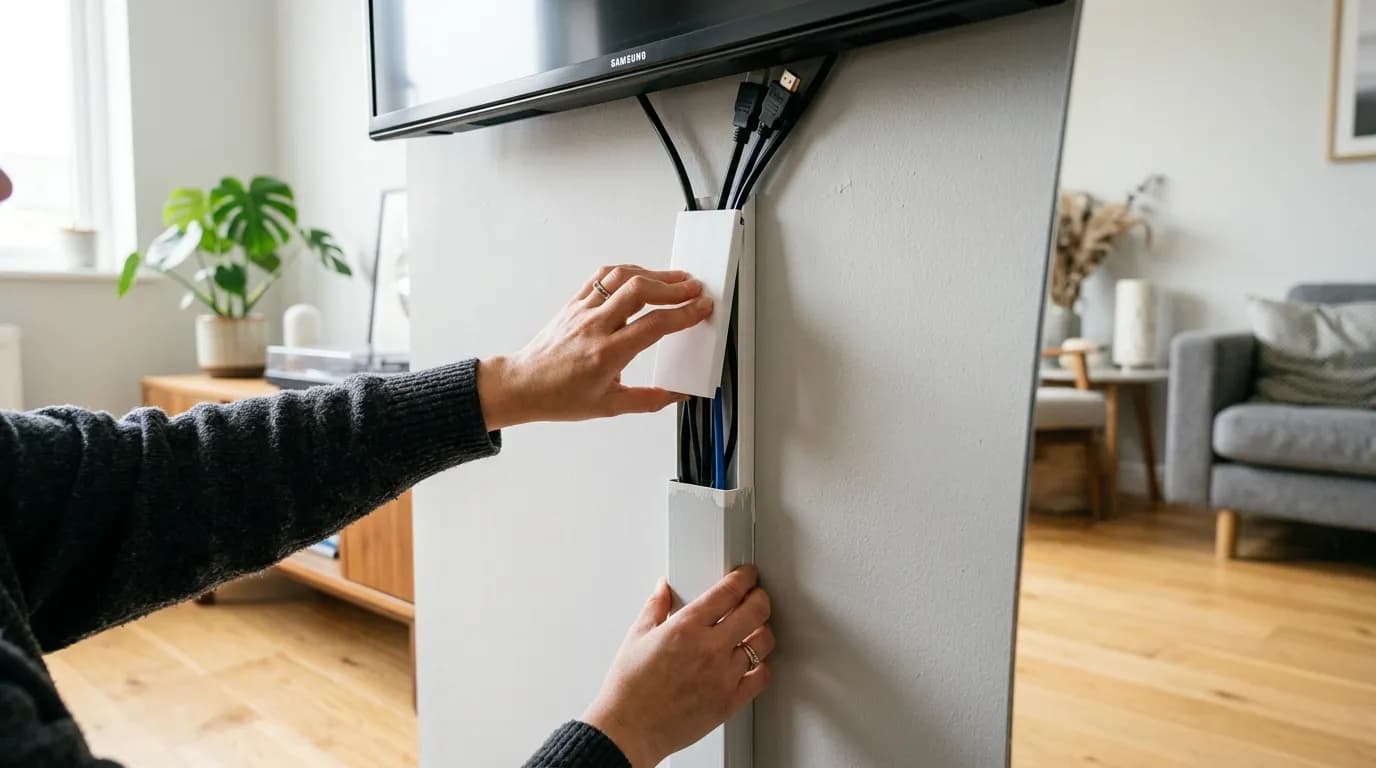
- Hide the modern clutter. Closed storage for the everyday machinery of life, and no visible cable runs — the tricks in our renter-friendly guide to hiding cables on walls keep a media wall inside the calm instead of outside it.
- Add the living details last. One plant with sculptural shape, a handmade ceramic bowl, a single piece of art with generous empty space around it. Then stop. The discipline of stopping is the style.
What Does Japandi Look Like in Real Rooms?
In real rooms, Japandi shows up as a low, quiet furniture line, walls in warm off-white or limewash, one or two dark wood accents against pale timber, and empty space treated as part of the design. The living room carries the social version; the bedroom carries the softer, most restful one.
The Japandi living room
A living room in Japandi interior design starts with the floor plan: a low sofa in oatmeal linen, a low oak coffee table, one darker side piece, and more visible floor than you are used to. The television sits on a low closed unit rather than a gallery wall of objects. A single large paper pendant replaces a chandelier, and the rug — flat-woven wool or jute — defines the seating zone without pattern.
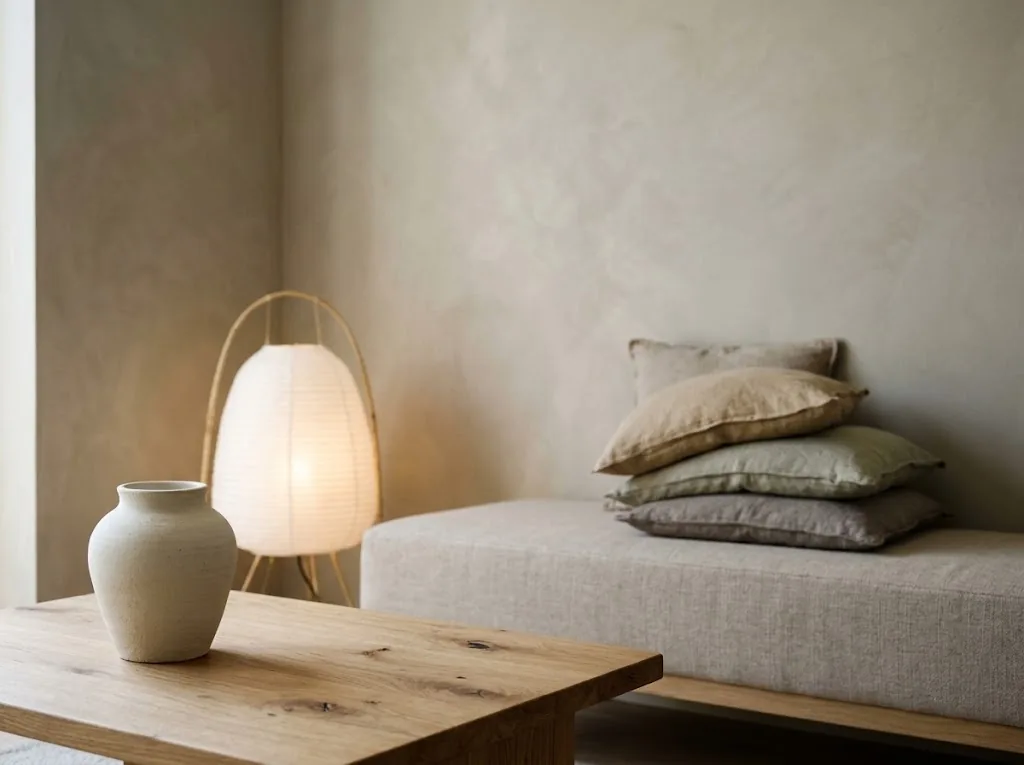
Treat the window as a design element, not a backdrop. Sheer linen keeps the daylight soft, and the view itself becomes the room's artwork; if the garden overlooks you, screening that view with planting — the approach in our guide to backyard privacy without a fence — keeps the connection to nature without the exposure. One tall plant inside the glass completes the line between room and garden.
The Japandi bedroom
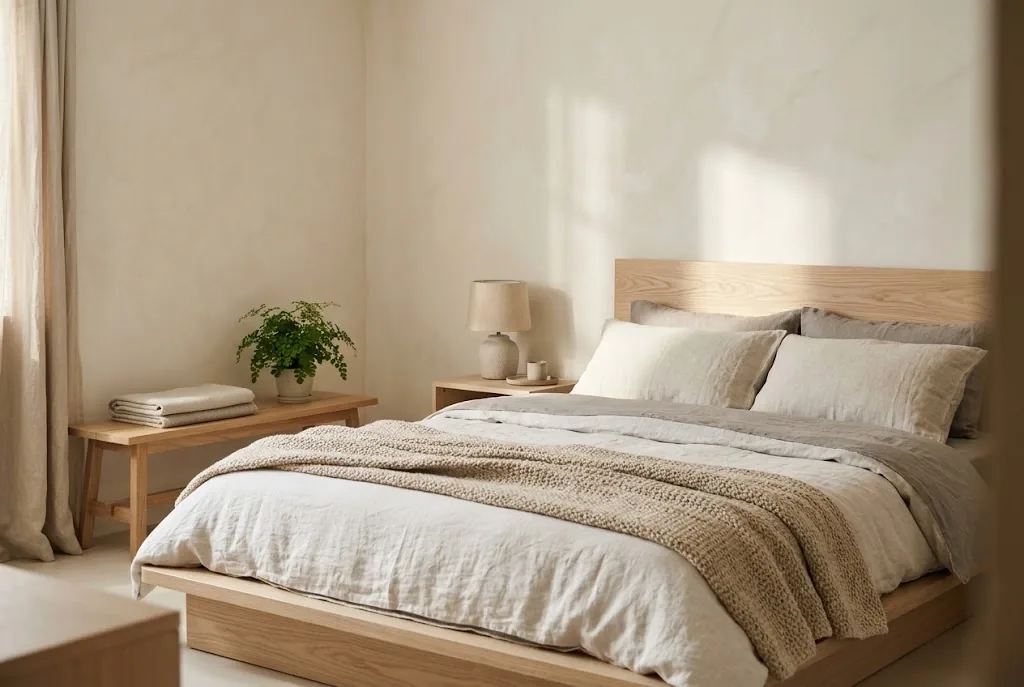
A Japandi interior design bedroom is the style at its most distilled: a low platform bed in light wood, bedding in layered off-white and stone linen, one bench or stool, and nothing on the surfaces except a book, a small lamp and perhaps a ceramic cup. Blackout comes from linen drapes rather than darkness of color; the room stays pale and wakes with the light.
Wardrobes and storage go flat-fronted and handle-light so the walls read as calm planes. If you add one indulgence, make it texture — a wool throw with visible weave across the foot of the bed. Bedrooms fail at Japandi in one predictable way: laundry, chargers and half-used products colonizing the surfaces. Closed storage is not optional in this room; it is the design.
Where modern Japandi is heading in 2026
Modern Japandi interior design is warming up. The pale, near-empty rooms of the early 2020s are giving way to richer rooms: darker woods beside the blonde ones, limewash and clay-plaster walls instead of flat paint, curved and kidney-shaped low tables instead of sharp rectangles, and fluted or scalloped wood detail on cabinets. Japandi interior design trends for 2026 also harden the sustainability rule — FSC-certified or reclaimed timber and visibly handmade pieces are becoming the baseline expectation, not the premium extra.
What Mistakes Ruin Japandi — and How Does It Compare?
The 2026 direction is darker, warmer and more handmade: walnut and smoked oak beside pale woods, limewash and clay-plaster walls, curved low shapes and certified or reclaimed timber. The look fails the same way it always has — beige rooms with no contrast, too many objects, and cold grey paint.
Japandi vs the styles it gets confused with
| Japandi | Scandinavian | Pure minimalism | |
|---|---|---|---|
| Feel | Calm and warm | Bright and cosy | Cool and stark |
| Palette | Warm neutrals + dark wood contrast | Whites and pastels, some pattern | White, grey, black |
| Furniture | Low, grounded, crafted | Comfortable, mid-height | Functional, often hidden |
| Decoration | Very little, handmade | Moderate, personal | Almost none |
Japandi also sits at the opposite pole from rich, decorative styles: where our Art Deco style guide gives a room one glamorous hero piece, Japandi removes heroes altogether and lets materials and space do the work. Knowing which pole a room leans toward prevents the most expensive mistake — mixing two complete styles at half strength each.
Dark Japandi interior design
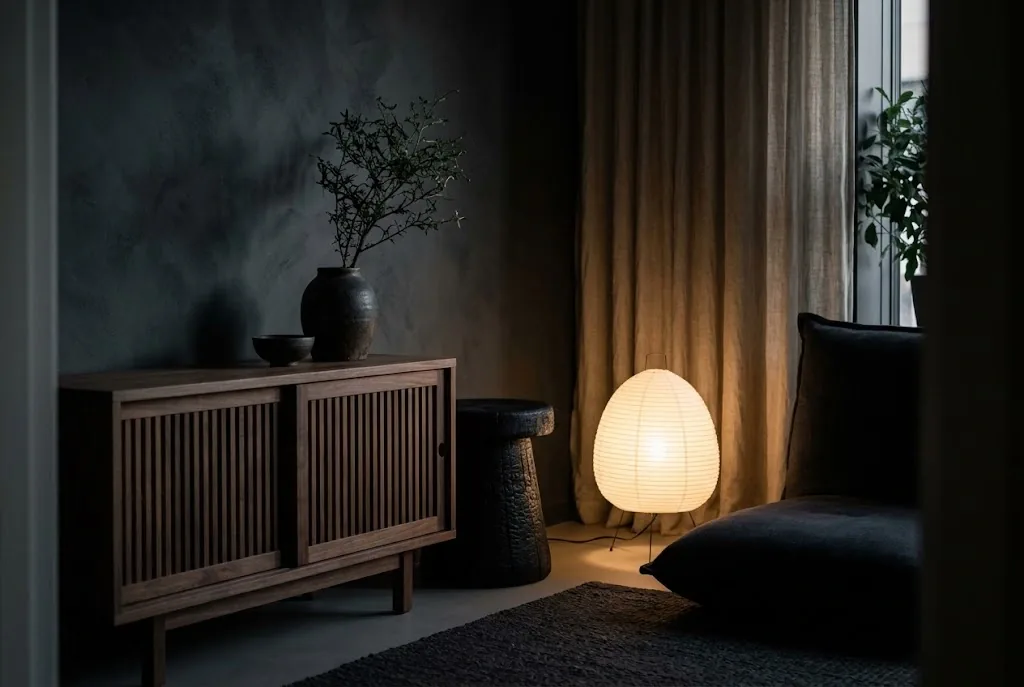
Dark Japandi interior design is the style's moody register: charcoal or deep olive walls, walnut and smoked or charred wood (the Japanese shou sugi ban technique), black stone, and pools of warm lamplight instead of bright even light. It keeps every Japandi rule — low lines, natural materials, strict editing — and changes only the tonal key. It suits north-facing rooms and evening spaces, and it punishes clutter even harder than the light version, because every object's edge catches the light.
The mistakes that break it
- All beige, no contrast. Without dark wood or charcoal somewhere, the room reads as an unfinished showroom.
- Too many small objects. Ten "Japandi-style" accessories are just clutter with better branding. Edit to a third of them.
- Cold colors. Blue-grey paint and stark white kill the warmth both parent styles depend on. Test colors in daylight before committing.
- Fake materials. Plastic rattan, printed wood-effect laminate and glossy finishes undo the honesty the style is built on.
- Standard-height everything. A tall sofa, high media unit and bar-height table erase the grounded line that makes Japandi feel different.
- Buying the set. Matching furniture suites read as a shop floor. Japandi pieces are collected, not matched — shared materials, different forms.
Frequently Asked Questions
What is Japandi interior design in simple words?
Japandi is a hybrid of Japanese and Scandinavian design. It combines low furniture, natural materials, warm neutral colors and uncluttered space, so rooms feel calm but lived-in rather than stark. Think Japanese restraint softened by Scandinavian comfort, wood, textiles and everyday ease.
What colors define a Japandi interior?
Warm neutrals do the work: off-white, oatmeal, beige, stone and warm greige on walls and large pieces. Depth comes from natural wood tones, then small doses of charcoal, muted green, clay or deep brown in textiles, ceramics and one or two accents.
Is Japandi the same as minimalist or Scandinavian design?
No. Scandinavian design is lighter, brighter and allows more pattern and decoration; minimalism can be cold and purely functional. Japandi adds Japanese discipline — lower furniture, darker wood contrast, fewer objects and more negative space — while keeping Scandinavian warmth and daily practicality.
Can Japandi work in a small apartment or a rental?
Yes — Japandi suits small and rented homes unusually well, because it needs fewer pieces, not more. Use light walls, low furniture that leaves floor visible, closed storage, and removable texture from rugs, cushions and paper lamps instead of structural changes or built-ins.
Is Japandi still in style in 2026?
Yes. Japandi has moved past trend status into a lasting modern style, and in 2026 it is evolving rather than fading: darker woods, warmer earth tones, limewash walls, curved shapes and handmade, certified materials are replacing the pale, near-empty rooms of early Japandi.
Conclusion
Japandi interior design works because it is a discipline before it is a look: edit hard, build on warm neutrals and natural materials, keep furniture low, and let empty space do quiet work. Start with one corner — clear it completely, add back only a low chair, a natural textile and one handmade object — and live with it for a week. If the calm holds, extend the same order to the rest of the room.