How to Dress Art Deco Style Today
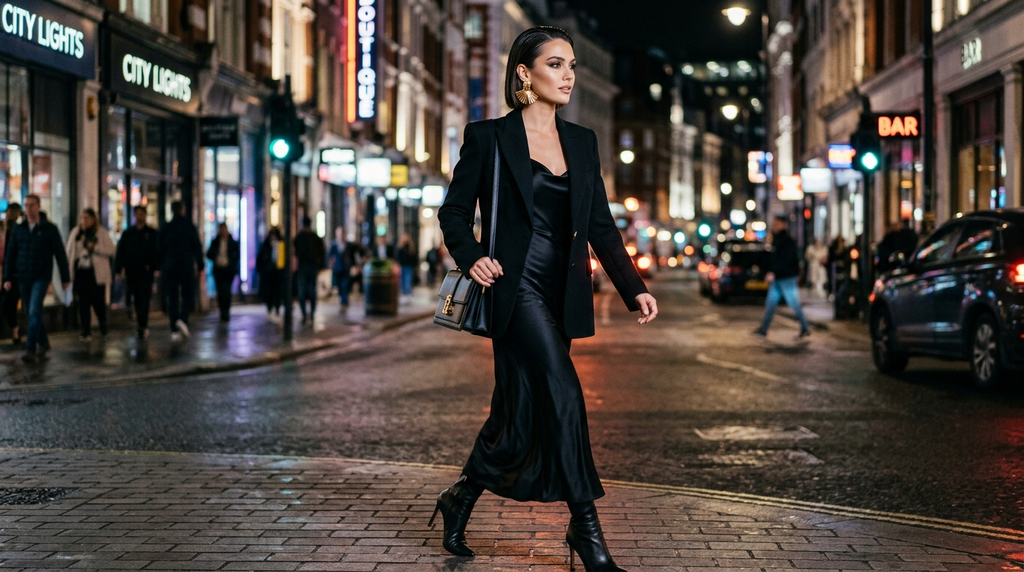
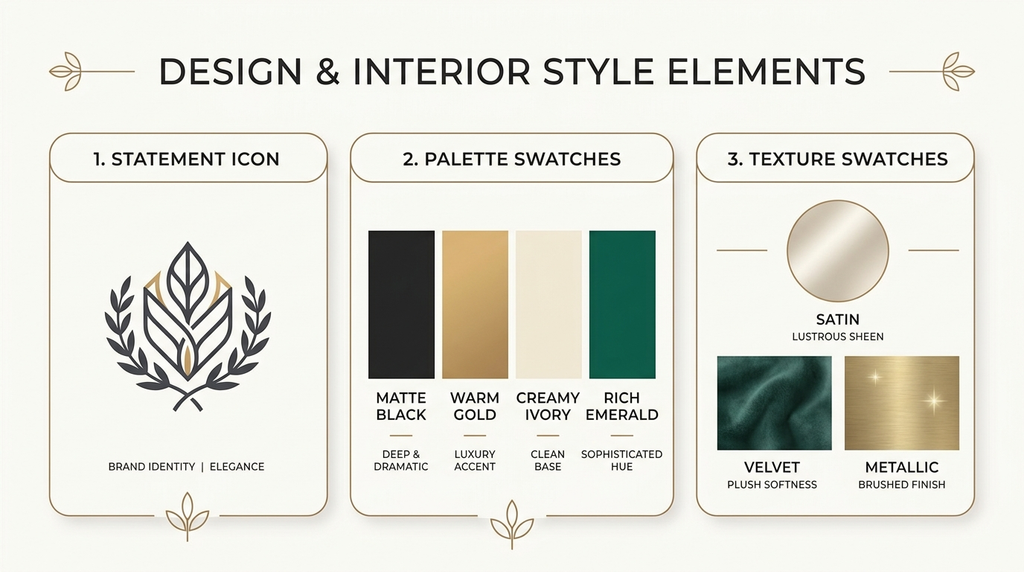
Dress Art Deco today with one statement piece per outfit inside otherwise modern tailoring: a bias-cut slip with a blazer, a fringe hem with a plain knit, fan earrings with head-to-toe black. Hold the era’s palette — black, gold, ivory, one jewel tone — and its textures — satin, velvet, beads, metallics — and let geometry do the talking rather than vintage styling head-to-toe. The line between homage and costume is the number of period elements you wear at once: one reads styled, three reads themed, five reads a party invitation.
Art Deco is the rare vintage aesthetic whose wardrobe elements never really left — the bias cut still anchors eveningwear, the LBD still anchors everything, and fringe, drop waists, and geometric jewelry cycle back on runways every few years. This guide translates the 1920s–30s originals into ten outfits you can wear to work, dinner, and a wedding without anyone asking what year you think it is.
At a Glance
| Idea | Statement piece | Modern support cast | Occasion |
|---|---|---|---|
| The Bias Column | Bias-cut slip dress | Blazer or fine knit + heels | Dinner, events |
| Drop-Waist Day | Drop-waist dress | Boots or loafers | Day, city |
| The Fringe Hem | Fringe skirt or dress | Plain fitted top | Evening |
| Fan Earrings + Black | Geometric drop earrings | All-black modern outfit | Anytime |
| Metallic Skirt | Gold or silver midi skirt | Cream knit + black shoes | Party, holiday |
| Velvet Trouser | Wide-leg velvet trousers | Silk camisole | Winter evening |
| The Beaded Clutch | Deco-pattern clutch | Simple LBD | Events |
| Sautoir Day | Long pearl or chain necklace | White shirt + straight jeans | Day |
| T-Strap Season | T-strap or Mary Jane heels | Anything tailored | Office to evening |
| The Wave | Finger-wave or pinned hair | One outfit, any | The finishing move |
How We Chose These Ideas
- Wearability filter. Every outfit passes a normal-life test: office, dinner, wedding guest, weekend — no costume-only entries.
- Buyability. Each statement piece exists new in mainstream stores today (the motifs never left) or findable secondhand.
- One-statement discipline. Each idea honors the era’s geometry or palette through a single element, per the translation rules below.
The Three Translation Rules (Why These Outfits Work)
Rule one: one statement per outfit. The Deco era’s own styling was actually restrained — a beaded dress wore no competing necklace; bold earrings meant a bare neck. Modern Deco dressing works the same way: pick the fringe OR the drop waist OR the geometric earrings, and let everything else read 2020s. The costume register begins at roughly three simultaneous period elements.
Rule two: palette discipline. Black + gold + ivory + one jewel tone (emerald, sapphire, ruby) per outfit. This narrow palette is what makes a single Deco element read intentional — a fringe hem in rust reads like a trend piece, while the same hem in black-with-gold-jewelry reads like a nod. The palette is the grammar; the statement piece is the sentence.
Rule three: texture carries the era. Satin, velvet, beads, sequins, and metallic thread are Deco’s actual signature — more than any silhouette. A fully modern outfit in satin and velvet reads more Deco than a costume dress in polyester crepe. When in doubt, upgrade texture before you add vintage styling.
#1. The Bias Column (The Evening Standard)
A bias-cut slip dress in silk-look satin, worn with a modern blazer or fine knit and heels.
Why It Works
The bias cut — fabric cut diagonally so it follows the body — is the 1930s’ great gift to fashion, and it remains eveningwear’s most flattering technology a century later. It’s the single most “Deco” thing you can wear that no one reads as vintage, because the silhouette never dated: column-skimming, movement-heavy, and elegant on more body types than almost any other evening shape.
How to Do It
- Choose black, ivory, emerald, or champagne — the era’s own colors.
- Layer with a modern structured piece (blazer, leather jacket) to anchor the look in the present.
- Jewelry stays minimal: one geometric element (small fan earrings or a linear bracelet) or none.
- Heels, hair modern. The bias is the statement.
Strengths
- Reads Deco to anyone who knows; reads elegant to everyone else
- Works across dinner, weddings, and formal events
- The fabric movement photographs beautifully
Trade-Offs
- Bias cuts cling — our satin-static guide covers the underpinnings and fixes
- Sizing is unforgiving; bias wants your true size, not aspirational
Best For
Evening events, wedding guests, and anyone building a Deco-adjacent wardrobe one piece at a time.
#2. Drop-Waist Day (The Daytime Translation)
A drop-waist dress — the 1920s’ defining silhouette — in a modern fabrication, worn with boots or loafers.
Why It Works
The drop waist freed fashion from the corset and reads as relaxed geometry rather than costume when the rest of the outfit stays contemporary. Modern versions (in knit, crepe, or poplin) with ankle boots and a tote read like this season’s midi-dress trend that happens to remember 1925. It’s also one of the friendlier silhouettes for straight figures and anyone who likes a loose shift with structure at the hip.
How to Do It
- Day: drop-waist dress + ankle boots or loafers + shoulder bag.
- Evening: swap in heeled sandals and one metallic element.
- Length matters — midi drop waists read modernest; true-mini reads festival.
Strengths
- Comfortable, loose through the body, moves well
- One dress spans day and evening with a shoe change
- The era’s signature silhouette in a wearable dose
Trade-Offs
- Petite frames can be shortened by the dropped seam — choose midi lengths or belt loosely at the natural waist
- The silhouette flatters some bodies more than others; try before committing
Best For
Weekend city dressing and casual Fridays with a fashion-forward register.
#3. Fan Earrings + All Black (The Zero-Effort Entry)
Geometric drop earrings — fans, chevrons, sunburst forms — worn with an otherwise plain all-black outfit.
Why It Works
It’s the one-statement rule reduced to its cheapest, most portable form. Black modern clothing is the perfect frame: the geometry reads as a deliberate accent, exactly the way the era’s own jewelers intended their boldest pieces to sit against simple gowns. One pair of fan earrings converts a work outfit into a styled one, and they fit in a pocket.
How to Do It
- Base: black knit + black trousers or dark straight jeans.
- Statement: gold geometric drops, medium scale — visible at conversation distance, not chandelier costume scale.
- Everything else bare: no necklace, hair simple.
Strengths
- Under-$40 entry to the aesthetic
- Works in offices, dinners, weekends — the most versatile idea here
- Travels in a coin purse
Trade-Offs
- Gold-tone fashion jewelry tarnishes — see the jewelry guide’s care section
- The subtle register won’t read “Deco” to anyone not looking — which is the point
Best For
Everyone; the first purchase and the daily workhorse.
#4. The Metallic Skirt (The Party Translation)
A gold or silver midi skirt in satin-finish fabric, worn with a cream knit and black shoes.
Why It Works
Metallic shine was Deco’s material signature — the champagne-gold palette of its ballrooms. A metallic midi skirt delivers that shine in a modern volume, and the cream-knit-on-top combination keeps it daytime-of-the-evening rather than costume: texture contrast, era palette, contemporary shape.
How to Do It
- Cream or ivory fine knit, tucked or half-tucked.
- Black shoes (ankle boots or pointy flats) to ground the shine.
- One gold element above the waist: the fan earrings, a linear bracelet.
Strengths
- Party-ready without any vintage styling
- The skirt works all winter long, New Year to February
- Reads rich — metallics photograph warm under evening light
Trade-Offs
- Metallic satin shows creasing; choose pleated or hammered finishes
- The shine tier wants an evening context — brunch will squint
Best For
Holiday season, parties, and dinner events.
#5. Velvet Wide-Leg Trousers (The Winter Translation)
Deep-jewel or black velvet wide-leg trousers with a silk camisole.
Why It Works
Velvet in a modern wide-leg cut delivers Deco’s opulent-material DNA with zero period silhouette. The camisole-and-trouser combination is also the era’s evening register translated through menswear — and it’s the most comfortable formal outfit in this list, which the 1920s would have endorsed wholeheartedly (the era’s whole project was liberating bodies from stiff clothing).
How to Do It
- High-rise velvet trouser, black or jewel tone.
- Silk-look camisole tucked; a thin belt if the waist wants definition.
- Heels disappear under the hem (see our linen-pants hem logic — same rules at longer lengths).
Strengths
- Winter-formal without a dress
- Enormously comfortable
- The texture carries the theme unaided
Trade-Offs
- Velvet crushes in a bag — wear, don’t pack
- Crunchy underfoot on icy sidewalks; boot the commute, change at the venue
Best For
Winter weddings, dinners, and holiday events.
The Modern Deco Capsule (Ten Pieces)
If the aesthetic appeals, build it as a capsule that overlaps with a normal wardrobe:
- Bias-cut slip dress (black or ivory)
- Drop-waist midi dress (black or navy)
- Fringe-hem skirt or dress (one, black)
- Geometric drop earrings (gold-tone)
- Linear or geometric cuff/bracelet
- Metallic midi skirt
- Velvet wide-leg trousers
- Beaded or metallic clutch
- Silk-look camisoles (ivory, black)
- T-strap or Mary Jane heels (black)
Seven of the ten serve non-Deco outfits too — the capsule logic from our 40-outfit guide applies: pieces that combine multiply; costume pieces that only theme, don’t.
The Seasonal Calendar (When Each Idea Earns Its Turn)
The aesthetic’s evening-leaning pieces distribute across the year more evenly than their party reputation suggests:
Autumn (the season Deco was born for): velvet trousers, the drop-waist dress with boots, jewel tones against the year’s first dark evenings. October through December is the aesthetic’s home season — the palette matches the light.
Winter (the formal season): the bias column, the metallic skirt, party tiers throughout. New Year’s Eve is the one night the full Deco register reads as simply “dressed correctly.”
Spring: the sautoir-over-white-shirt register, the drop-waist in lighter fabrications, ivory and champagne replacing black as the base. The era’s daytime DNA takes over as the shine tier rests.
Summer: metallic sandals and the lightest satin camisoles; evening events carry the bias slip in pale tones. High summer is the aesthetic’s quietest month by design — Deco was an indoor, lamplit style, and fighting that in August reads as effortful.
The calendar’s lesson: this is a wardrobe for the seasons with long evenings. Let it peak from September to February and rest gently in between.
Different Situations
The Office
Fan earrings with black knit (idea #3) and the velvet trouser on dress-down Fridays. The bias slip stays after hours unless your office is creative — worn with a blazer it can pass, worn alone it’s dinner.
Wedding Guest
The bias column in emerald or champagne, heels, one bracelet. Check our what-to-wear-under guide if the slip runs sheer; check the maxi-dress jacket guide for the cover-up — cropped bouclé is the Deco-adjacent answer.
Casual Weekend
Sautoir-length pearls or a long chain over a white shirt with straight jeans — the era’s long-necklace habit on a fully modern base. This is the lightest touch in the article and possibly the most chic.
Full-Immersion Events
Gatsby parties and themed events want the complete register — that’s a different brief entirely, and our party-outfit guide covers it: fringe, waves, headbands, and the deliberate costume tier.
Real-World Examples: Three Wardrobes
The one-piece convert. A lawyer who loved the era but couldn’t costume for court started with the fan earrings, added the bias slip for dinners, and found within a season that her existing black wardrobe had been the missing frame all along. Three purchases total; the aesthetic reads throughout her week.
The capsule builder. A vintage-market regular built the ten-piece capsule over a year of secondhand finds — the metallic skirt new, everything else sourced. Her report: the capsule covers roughly a quarter of her outfits now, and the pieces mix into the rest of her wardrobe more than they theme.
The wedding-guest calibration. A December wedding with a “vintage glam” dress code: the guest wore the bias column in emerald, finger-waved the front of her hair only (the modern compromise on waves — see troubleshooting), and left the headband, gloves, and clutch-chain at home. Photographs read period-inspired; the dance floor read comfortable.
Common Mistakes to Avoid
- Head-to-toe vintage styling — beaded dress plus fringe shawl plus headband plus long gloves plus waves is a costume by any measure. One statement; modern everything else.
- Polyester “flapper costumes” as daily wear — the era’s whole argument was material quality; shiny nylon crepe argues the opposite. Buy the best base fabric you can afford.
- Mixing gold and silver hardware across the outfit — pick one metallic family, per the palette rule.
- Anachronistic pairings — a drop-waist dress with chunky dad sneakers fights itself; sleek footwear was the era’s constant.
- Wearing every Deco element you own because it’s December — holiday season tempts theme-stacking; the one-statement rule holds especially at parties.
Troubleshooting
- “I look like I’m in a play.” Count the period elements; remove two. The play is cast by accumulation.
- The bias slip clings. Static and bias both misbehave: our satin-skirt static fixes apply, and the right underpinnings (the white-dress guide’s slip logic) solve the rest.
- The drop waist shortens you. Choose midi length, add height in the shoe, or style with hair up — the vertical line returns.
- Gold-tone earrings irritate sensitive ears. Look for surgical-steel posts or gold-filled (not just plated) findings — the jewelry guide’s buying checklist covers the tiers.
- The fringe hem tangles in the wash. Hand wash, hang, and comb the fringe straight while damp — fringe forgives everything except the tumble dryer.
Limitations and Trade-Offs
Deco dressing is an evening-leaning aesthetic: its textures (satin, beads, metallics) sit naturally after dark and need forcing for daylight, which is why this guide’s daytime ideas lean on geometry and long necklines rather than shine. Authentic vintage in wearable condition is scarce and priced accordingly — the modern-reproduction route is the practical one for daily wear. And the aesthetic’s formality sets a ceiling: gyms, beaches, and school runs will never read Deco, and shouldn’t.
Practical Checklist
□ One statement piece chosen per outfit □ Palette held: black / gold / ivory / one jewel tone □ Texture doing the era’s work (satin, velvet, metallic) □ Footwear sleek — no chunky conflicts □ One metallic family only □ Hair and makeup modern (waves = one outfit’s finishing move) □ Back view checked with the clutch and the heels on
Regional Notes
United States: Deco dressing peaks from Thanksgiving to New Year (party season aligns with the palette) and lives year-round in cities with visible Deco architecture — Miami and New York wear it naturally.
UK: The era’s own home turf — vintage fairs and Deco-era hotels keep the aesthetic in circulation, and the jewel tones suit northern winter light.
Australia: Race days and the Christmas-in-summer circuit carry the metallic and bias tiers; swap velvet for silk-weight fabrics in the southern summer.
Canada: Winter weddings carry the velvet and bias tiers through the long cold season.
Expert / Official Guidance
- Victoria and Albert Museum / The Metropolitan Museum of Art: period garments in their collections define the originals these outfits translate — both publish object photos online for reference.
- Our pillar guide — “What Is Art Deco Style? Fashion and Décor Guide” — covers the history, motifs, and décor side in full.
Frequently Asked Questions
Can I wear this to work?
The earring-and-black register (idea #3) and the velvet trouser pass in most offices; the bias slip and fringe are after-hours tiers. Deco is evening-leaning by nature — let the daytime ideas carry the nine-to-five.
Where do I buy modern Deco pieces?
Mainstream retailers cycle the elements continuously (slip dresses, metallic skirts, drop waists, geometric earrings are perennially stocked); vintage markets and jeweler’s Deco-inspired collections fill the rest. Avoid the costume aisle — that’s party-wear polyester.
Do I need vintage hair?
No — and daily, you shouldn’t. Finger waves are one outfit’s finishing move, not a lifestyle. Modern hair with one Deco element reads current; full period styling reads costume.
What shoes besides heels?
Loafers and ballet flats carry the daytime ideas; the Mary Jane and T-strap families carry the dressy ones at lower heights. The rule is sleek and low-contrast with the outfit.
How is this different from Gatsby party dressing?
Party dressing is the costume tier — deliberate, complete, themed (our party guide covers it). This guide is the opposite project: the smallest dose of the era that reads in daily life.
What’s the single first purchase?
Gold geometric drop earrings. Under $40, they convert every black outfit you already own, and they’ll tell you within a week whether the rest of the capsule is worth building.
Final Takeaway
Pick one statement per outfit, hold the black-gold-ivory-jewel palette, and let satin, velvet, and metallics do the era’s talking. Start with fan earrings against black, add the bias slip for evenings, and stop at one period element — the moment a second joins it, you’re dressing for a theme instead of dressing well. The 1920s invented modern dressing; wearing it modernly is the tribute it actually deserves.