Byline: Sophia Winters, Senior Entertainment Reporter
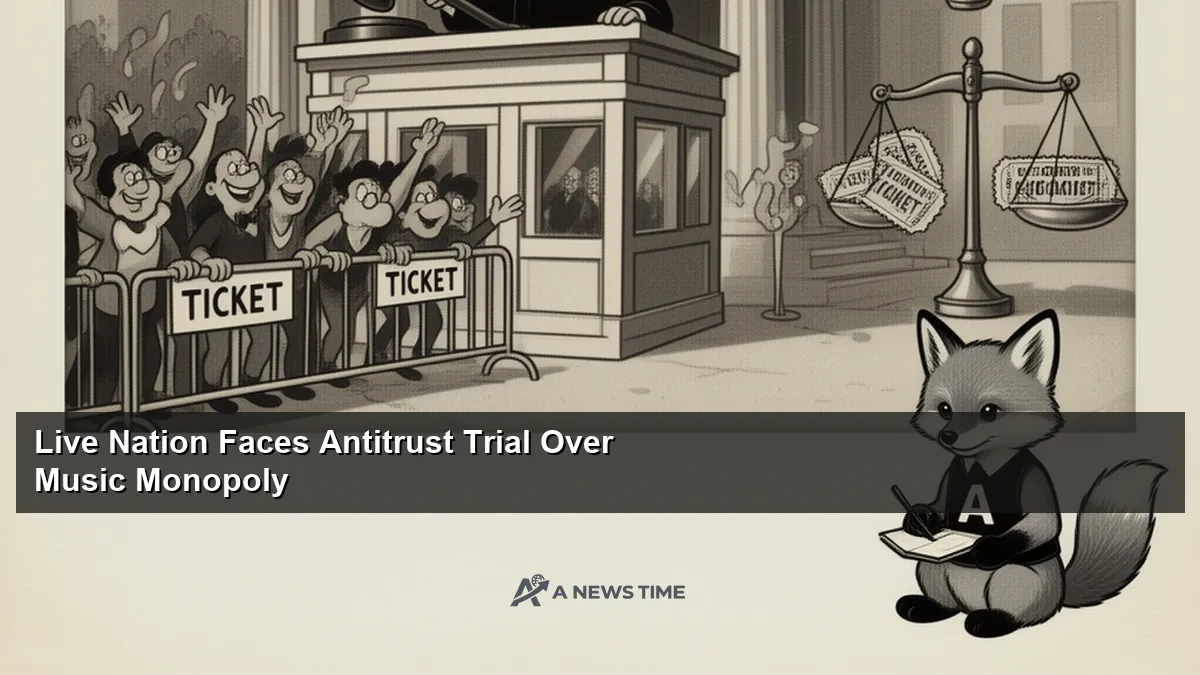
A federal jury is about to decide whether Live Nation Entertainment, the company that owns Ticketmaster and controls a staggering share of the live music ecosystem, operates as an illegal monopoly. The antitrust trial, brought by the United States Department of Justice, is the most significant legal challenge the live entertainment industry has faced in decades. Its outcome could reshape how Americans buy concert tickets, how artists choose their venues, and how much you pay to see your favorite band perform.
If you have ever stared at a Ticketmaster checkout screen in disbelief as a $75 concert ticket ballooned to $130 after fees, this trial is about you. If you have ever wondered why the same company that sells the tickets also promotes the show and owns the venue, this trial is about the structure that makes that possible. And if you have ever felt that the live music experience has become prohibitively expensive for ordinary fans, this trial is about whether the law can do anything about it.
The Case Against Live Nation
The Department of Justice's case rests on a straightforward argument: Live Nation has accumulated so much control over the live entertainment value chain that it has effectively eliminated meaningful competition. The company operates Ticketmaster, the dominant ticketing platform in North America. It promotes concerts through Live Nation Concerts, the largest concert promoter in the world. And it owns or operates more than 300 venues globally, including many of the most prominent concert halls and amphitheaters in the United States.
This vertical integration, prosecutors argue, creates an ecosystem where Live Nation can leverage its dominance in one area to maintain or extend its control in others. A venue that wants access to Live Nation's roster of touring artists may feel pressure to use Ticketmaster for its ticketing. An artist who wants to play at Live Nation venues may feel pressure to use Live Nation as their promoter. And consumers, who have limited alternatives for purchasing tickets to major events, are left paying whatever fees Ticketmaster chooses to impose.
The DOJ's complaint, filed after an extensive investigation, alleges that Live Nation has engaged in a pattern of anticompetitive behavior designed to protect its market position. Specific allegations include retaliatory actions against venues that considered using competing ticketing platforms, exclusive dealing arrangements that lock venues into long-term Ticketmaster contracts, and the use of its market power to suppress potential competitors before they can gain a foothold.
"When a single company controls the venues, promotes the shows, and sells the tickets, the competitive market that should protect consumers ceases to function. The result is higher prices, fewer choices, and an industry that serves the interests of one company at the expense of everyone else."
Department of Justice filing
Live Nation's Defense
Live Nation has vigorously contested the DOJ's characterization of its business. The company argues that it achieved its market position through superior execution, not anticompetitive behavior. Ticketmaster, Live Nation contends, is the dominant ticketing platform because it offers the most comprehensive technology, the largest network of venue partnerships, and the most reliable service for handling the massive demand spikes that occur when popular artists go on sale.
The company also argues that the live entertainment market is more competitive than the DOJ suggests. Independent promoters, regional ticketing companies, and artist-direct ticketing platforms all compete with Live Nation, the company says, and the entry of technology companies like Amazon into the ticketing space demonstrates that barriers to entry are not insurmountable.
On the question of fees, Live Nation has been less convincing. The company has acknowledged that its fee structure is complex and often opaque to consumers, but it argues that the fees reflect genuine costs, including technology development, venue operations, and artist guarantees, rather than monopoly rents. This argument has been met with skepticism by consumer advocates who point out that Ticketmaster's fees have risen far faster than inflation and that the company's profit margins suggest its pricing power exceeds what a competitive market would allow.
Live Nation has also pointed to the 2010 consent decree that governed its merger with Ticketmaster. When the two companies merged, the DOJ approved the deal subject to conditions designed to prevent anticompetitive behavior. Live Nation argues that it has complied with those conditions and that the current lawsuit represents an attempt to relitigate a merger that was already approved.
The Taylor Swift Effect
No discussion of the Ticketmaster controversy is complete without mentioning the event that brought the issue into mainstream consciousness: the catastrophic failure of the ticketing system during the sale for Taylor Swift's Eras Tour in November 2022. The presale event crashed the Ticketmaster platform, leaving millions of fans unable to purchase tickets and generating a level of public outrage that reached the halls of Congress.
The Eras Tour debacle did not cause the DOJ investigation, which was already underway, but it dramatically accelerated the political momentum behind it. Congressional hearings followed, featuring testimony from fans, industry professionals, and Live Nation executives. The bipartisan anger on display at those hearings was notable in an era of intense partisan division, demonstrating that concert ticket prices have a unique ability to unite Americans across political lines.
Swift herself did not testify but released a statement expressing frustration with the situation and sympathy for fans who were unable to obtain tickets. The incident transformed the Ticketmaster issue from an industry wonk concern into a genuine populist cause, giving the DOJ both political cover and public support for pursuing the case aggressively.
The Eras Tour ultimately became the highest-grossing concert tour in history, generating an estimated $2 billion in revenue. That number, while a testament to Swift's extraordinary drawing power, also illustrated the scale of the economic ecosystem that Live Nation controls. A significant portion of that $2 billion flowed through Live Nation's infrastructure, from ticketing fees to venue operations to promotional services.
What a Breakup Would Look Like
The most dramatic potential outcome of the trial is a court-ordered breakup of Live Nation, separating Ticketmaster from the concert promotion and venue operations businesses. This is the remedy the DOJ has indicated it would seek if the jury finds that Live Nation has operated as an illegal monopoly.
A breakup would be the most significant antitrust action in the entertainment industry since the Paramount consent decrees of 1948, which forced movie studios to sell their theater chains. The parallel is instructive. In the studio era, the major film studios controlled production, distribution, and exhibition, allowing them to dictate what films audiences could see and how much they would pay. The Paramount decrees broke that vertical integration and ushered in a more competitive era for the film industry.
Whether a similar breakup of Live Nation would produce similar results is the subject of intense debate. Proponents argue that separating Ticketmaster from Live Nation's promotion and venue businesses would create a genuinely competitive ticketing market, driving down fees and improving service. Without the leverage that comes from controlling venues and artist relationships, a standalone Ticketmaster would have to compete on price and quality like any other technology platform.
Skeptics counter that the ticketing market has structural characteristics that tend toward consolidation regardless of ownership. Venues prefer to work with a single ticketing platform for operational simplicity. Artists and their management teams prefer platforms with the largest installed user base. And the technology required to handle high-demand onsales, including sophisticated queue management and anti-bot systems, involves fixed costs that favor scale.
For perspective on how technology companies navigate similar antitrust pressures, see our coverage of the intersection of AI and corporate power.
The Fan Perspective
For the average concertgoer, the trial boils down to a simple question: will it make concerts more affordable? The honest answer is that no one knows. Antitrust enforcement can correct structural imbalances in a market, but it cannot repeal the laws of supply and demand. The fundamental problem driving concert ticket prices is that demand for live music far exceeds the supply of seats at major venues, and no amount of market restructuring will change that.
What a more competitive ticketing market could address is the fee problem. Ticketmaster's fees, which can add 25% to 40% to the face value of a ticket, have been the primary source of consumer anger. In a competitive market, ticketing platforms would compete to offer lower fees, giving consumers more value for their money. Whether the savings would be significant enough to materially change the concert experience for fans is debatable, but even modest reductions would represent an improvement over the status quo.
The trial has also focused attention on the secondary ticket market, where resellers (both professional scalpers and casual fans) buy tickets at face value and resell them at significant markups. Live Nation operates a secondary market through its Ticketmaster Verified Resale platform, which critics argue gives the company a financial interest in allowing tickets to reach the secondary market at inflated prices.
- Live Nation controls: Ticketmaster (ticketing), Live Nation Concerts (promotion), 300+ venues
- Average ticket fee markup: 25% to 40% above face value
- DOJ argument: Vertical integration eliminates competition
- Live Nation defense: Market position earned through superior service
- Potential remedy: Forced separation of Ticketmaster from Live Nation
Industry Reactions
The music industry's response to the trial has been divided, predictably, along lines of self-interest. Independent promoters and smaller ticketing companies have largely supported the DOJ's case, arguing that Live Nation's dominance has made it impossible for them to compete fairly. Several independent promoters have provided testimony or evidence supporting the government's allegations of retaliatory behavior.
Major artists and their management teams have been more circumspect. While many privately express frustration with Ticketmaster's fee structure and the limited alternatives available, few are willing to publicly oppose a company that controls access to the most desirable venues and has the power to make or break a tour's financial success. The power dynamics at play are exactly the kind of leverage that the DOJ's case is designed to address.
Venue operators are similarly conflicted. Many are locked into long-term exclusive contracts with Ticketmaster and face financial penalties for switching to competing platforms. Those contracts, which the DOJ alleges are anticompetitive, represent both a constraint on venue operators' freedom and a source of guaranteed revenue that some operators are reluctant to give up.
The technology sector has watched the trial with particular interest. Companies including Amazon, Google, and Apple have explored or are actively developing ticketing capabilities. A court-ordered breakup of Live Nation could create competitive space for these tech giants to enter the market, bringing their resources, user bases, and technological expertise to bear on the ticketing problem.
The Broader Antitrust Moment
The Live Nation trial is part of a broader resurgence of antitrust enforcement in the United States. The DOJ and the Federal Trade Commission have pursued cases against major technology companies, pharmaceutical firms, and other industries in what represents the most aggressive period of antitrust enforcement in decades.
The political dynamics supporting this enforcement are unusual. Antitrust action has found support from both progressive Democrats, who view corporate concentration as a driver of inequality, and populist Republicans, who see monopolistic behavior as a threat to free markets and individual liberty. The Ticketmaster issue, in particular, has demonstrated that consumer frustration with concentrated corporate power transcends partisan boundaries.
Whether this antitrust moment produces lasting structural changes in the entertainment industry or fades as political priorities shift remains to be seen. But the Live Nation trial, regardless of its outcome, has already achieved something significant: it has forced a public reckoning with the degree to which a single company controls the live music experience in America, and it has made the question of whether that control serves the public interest impossible to ignore.
For related analysis on how corporate consolidation affects media and entertainment, check out our coverage of major developments reshaping industries in 2026.
What to Watch Next
The trial is expected to last several weeks, with the jury's verdict likely coming in late spring or early summer 2026. Key witnesses will include current and former Live Nation executives, independent promoters, venue operators, and potentially representatives from competing ticketing platforms. Expert testimony on market definition and competitive effects will play a central role in both sides' cases.
Regardless of the verdict, the trial will not be the end of the story. If Live Nation prevails, the DOJ could appeal or pursue other regulatory remedies. If the government wins, the remedy phase, in which the court determines what structural changes are necessary, could take years to resolve. And the broader question of how to ensure a fair, competitive, and consumer-friendly live entertainment market will continue to evolve as technology, artist behavior, and audience expectations change.
For now, the most important thing fans can do is pay attention. The outcome of this trial will determine, to a significant degree, what the concert experience looks like for the next generation of music fans. Whether that experience is defined by competition and choice or by the continued dominance of a single corporate entity is, quite literally, up to a jury.